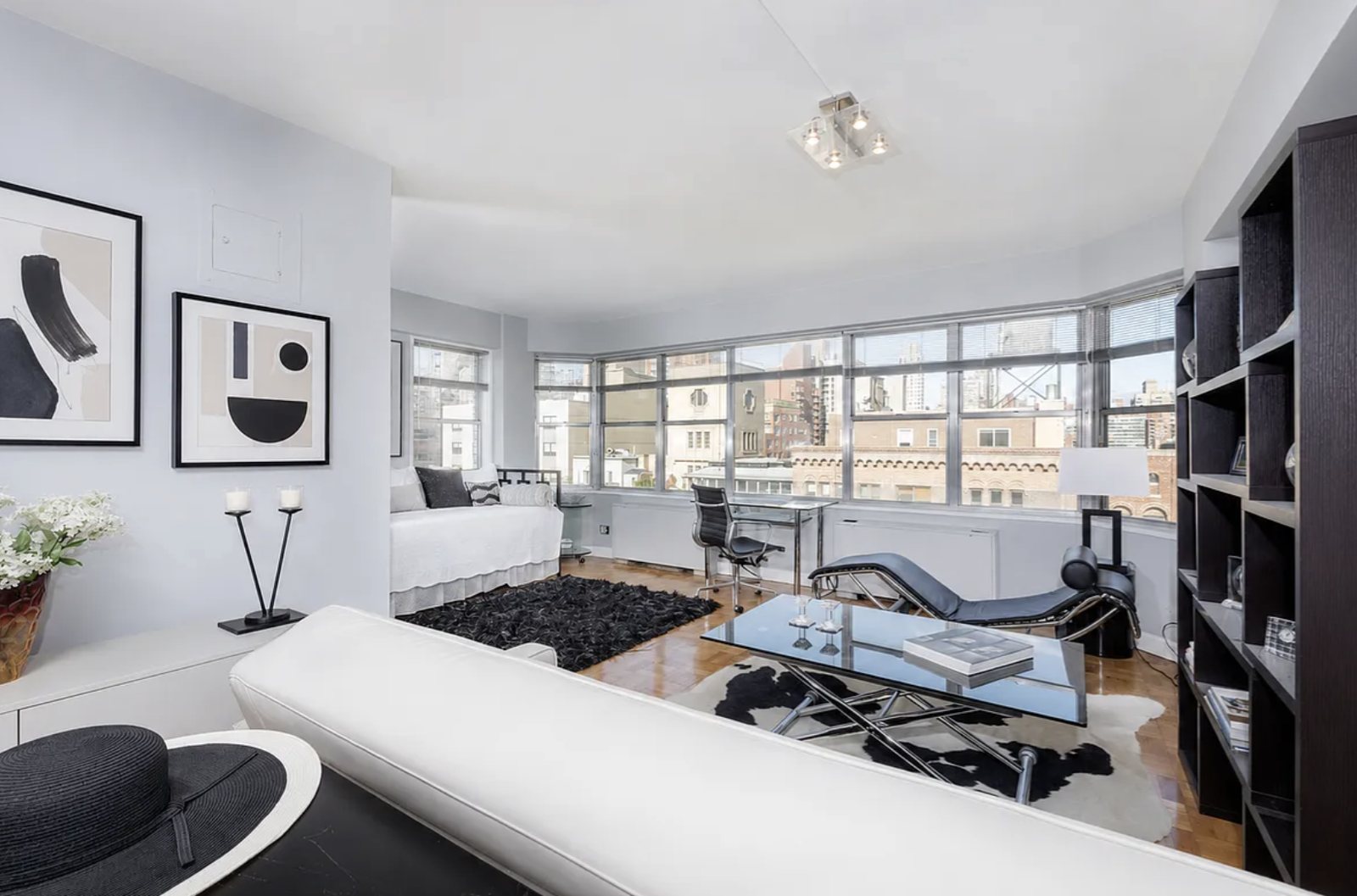
- A $1,000,000 Upper East Side purchase costs about $17,000 to $27,000 to close as a co-op and $37,000 to $47,000 as a condo, with 20% down.
- The state mansion tax adds 1% at $1 million and 1.25% at $2 million. Co-op maintenance includes property tax. Condos bill it separately.

Peter Tumbas
REALTOR® · Berkshire Hathaway HomeServices New England Properties
Buying on the Upper East Side costs more than the price on the listing. Taxes, lender and attorney fees and building charges add roughly 2% to 5% at closing, and the size of that bill depends mostly on whether you buy a co-op or a condo. This guide uses 2026 tax rates and recent market data. Figures are as of October 3, 2026.
What does an Upper East Side apartment cost in 2026?
The median home on the Upper East Side sold for $1,399,325 over the three months ending August 2026, according to Redfin. That was 3.5% lower than a year earlier. Homes sold at 99.3% of list price after a median of 76 days on the market, and 616 homes sold in the period.
Co-ops and condos sit in different price tiers. Corcoran reported a median resale co-op price of $1.095 million on Manhattan's East Side in the second quarter of 2026 and a median resale condo price of $2.014 million. The East Side median across both types was $1.35 million, at an average of $1,801 per square foot. Across all of Manhattan in the third quarter, Corcoran put the median resale co-op at $875,000 and the median resale condo at $1.65 million.
Sources: Corcoran Manhattan Q2 2026 report (East Side) and Redfin (Upper East Side). Data as of October 3, 2026. The two sources define the area differently.
Treat these as ranges. Redfin measures the Upper East Side neighborhood, while Corcoran's East Side is a wider area. Prices inside the Upper East Side vary by building, block and floor more than any neighborhood median shows.
What do buyers pay at closing?
On a $1,000,000 purchase with 20% down, buyer closing costs run about $17,000 to $27,000 for a co-op and $37,000 to $47,000 for a condo. The gap comes almost entirely from two items that co-ops avoid: mortgage recording tax and title insurance.
| Item | Co-op | Condo |
|---|---|---|
| Mansion tax (1% at $1 million) | $10,000 | $10,000 |
| Mortgage recording tax (1.925% of loan) | $0 | $15,400 |
| Title insurance | $0 (lien search $350 to $450) | $4,000 to $4,500 |
| Lender fees | $3,000 to $10,000 | $3,000 to $10,000 |
| Buyer's attorney | $2,000 to $3,000 | $2,500 to $3,500 |
| Bank's attorney | $1,000 to $1,500 | $1,000 to $1,500 |
| Building application and move-in fees | $1,000 to $2,000 | $1,000 to $2,000 |
| Total | $17,350 to $26,950 | $36,900 to $46,900 |
| Share of price | 1.7% to 2.7% | 3.7% to 4.7% |
Taxes are statutory. Fee ranges combine published 2026 broker estimates. Cash buyers skip the mortgage recording tax, lender fees and the bank's attorney. Condo loans under $500,000 pay 1.8% instead of 1.925%.
Statutory taxes plus published 2026 broker estimates for fees. Data as of October 3, 2026. Your lender and attorney set the final figures.
Co-op purchases skip the mortgage recording tax because the loan is secured by shares in the corporation, not by a recorded mortgage on real property. Condo buyers pay it on the loan amount. That one tax is the largest difference between the two.
How does the New York mansion tax work?
The mansion tax is a one-time state tax that the buyer pays on residential purchases of $1 million or more. It applies to the entire price, not only the amount above the threshold, and it applies to co-ops and condos alike. The rate steps up at each bracket.
| Purchase price | Rate | Tax at bracket floor |
|---|---|---|
| $1,000,000 to $1,999,999 | 1.00% | $10,000 |
| $2,000,000 to $2,999,999 | 1.25% | $25,000 |
| $3,000,000 to $4,999,999 | 1.50% | $45,000 |
| $5,000,000 to $9,999,999 | 2.25% | $112,500 |
| $10,000,000 to $14,999,999 | 3.25% | $325,000 |
| $15,000,000 to $19,999,999 | 3.50% | $525,000 |
| $20,000,000 to $24,999,999 | 3.75% | $750,000 |
| $25,000,000 and above | 3.90% | $975,000 |
Rates in effect for 2026 closings. The rate applies to the full price. Data as of October 3, 2026.
Each bracket creates a cliff. A $1,999,999 purchase pays about $20,000. A $2,000,000 purchase pays $25,000. If you negotiate near a threshold, a price cut from $2,000,000 to $1,999,000 saves $1,000 in price and about $5,000 in mansion tax.
What does the seller pay?
Sellers usually pay the transfer taxes, and those taxes shape the price a seller needs. New York State charges 0.4% ($2 for every $500). New York City adds 1% on the first $500,000 and 1.425% on residential sales above that. On New York City residential sales of $3 million or more, the state rate rises to 0.65%.
- Up to $500,000: 1.4% combined
- Above $500,000: 1.825% combined, or $18,250 on a $1,000,000 sale
- $3,000,000 and above: 2.075% combined
In new development, the contract can shift transfer taxes to the buyer. Read the offering plan and the contract before you sign. Co-op sellers may also owe a flip tax, which commonly runs 1% to 3% of the price when a building charges one.
What are the monthly costs?
Monthly costs work differently in each ownership type.
- Co-op: Monthly maintenance covers building operating costs, the building's property taxes and its share of any underlying mortgage. One May 2026 broker guide put maintenance for a one-bedroom co-op priced near $1 million at $1,200 to $1,800 a month.
- Condo: You pay common charges to the building and a separate property tax bill to the city. Some newer condos carry tax abatements that expire, so ask for the end date.
- Both: Special assessments can arise, including façade work required under Local Law 11. Ask for the last two years of building financial statements and the reserve fund balance.
Compare the total monthly carry of two apartments, not the price. A cheaper co-op with high maintenance can cost more each month than a pricier condo with low common charges and a modest tax bill.
Does the new pied-à-terre tax affect buyers?
It affects you if the apartment will not be your primary residence. New York enacted a pied-à-terre law on May 28, 2026. The NYC Department of Finance now charges an annual surcharge on non-primary-residence condos and co-ops valued above $1 million. Its published rates are 4% for $1 million to $3 million, 5.25% for $3 million to $5 million and 6.5% above $5 million. The first charges appear on the property tax bill due January 1, 2027, and those rates cover tax years 2026-27 and 2027-28. Later years follow a different schedule.
The surcharge does not apply when the unit is the primary residence of the owner, a tenant or a qualifying family member, among other exemptions. If you plan to buy a second home, a pied-à-terre or an apartment for a relative who lives elsewhere, ask your attorney to quantify the surcharge before you sign. It is an annual charge, so it matters more over time than any one-time closing cost.
How much cash do you need to close?
Co-op boards often require 20% to 25% down. One May 2026 broker guide estimated $250,000 to $320,000 in total cash for a $1,000,000 co-op once closing costs and post-closing liquidity are included. Many boards also require cash reserves after closing, and the amount differs by building. Our guide to the co-op board package lists what boards ask to see.
Most condos do not run a financial board review, so your lender sets the down payment requirement. Read Co-op or Condo on the Upper East Side for the full comparison of approval, financing and resale rules.
A worked example at $1,500,000
Take a $1,500,000 purchase with 20% down, which means a $1,200,000 loan. The mansion tax is 1%, or $15,000, for both types. A condo adds $23,100 in mortgage recording tax (1.925% of the loan). Taxes alone come to $15,000 for the co-op and $38,100 for the condo.
Adding fees and title insurance, the co-op costs about $22,350 to $31,950 to close, or 1.5% to 2.1% of the price. The condo costs at least $49,600 and up to about $60,000, or 3.3% to 4.0%. Title insurance rises with price, so the condo figure uses the $1,000,000 range as a floor. At the same price, the condo costs about $27,000 more to close.
How to lower what you pay
- Compare total cost, not price. Add closing costs, monthly carry and any assessments for each building.
- Borrow less on a condo. Each $100,000 you do not borrow saves $1,925 in mortgage recording tax.
- Watch the brackets. A price just under $2 million or $3 million can save thousands in mansion tax.
- Ask about the building before you offer. Request financials, planned assessments, abatement end dates and the flip tax.
- Decide how you will use the apartment. A non-primary residence can trigger the new surcharge every year.
General information only, not legal, tax or financial advice. Rates, fees and rules change, and each transaction differs. Confirm figures with a New York real estate attorney and your lender before you rely on them.
Frequently asked questions
How much are closing costs for a co-op on the Upper East Side?
A buyer typically pays about $17,000 to $27,000 on a $1,000,000 co-op with 20% down, or roughly 1.7% to 2.7% of the price. The largest item is the 1% mansion tax, which applies at $1 million and above. Co-op buyers do not pay mortgage recording tax or buy title insurance. Fees from your lender, your attorney, the bank's attorney and the building make up the rest. See also: Co-op or Condo on the Upper East Side.
Do buyers pay mortgage recording tax on a co-op in New York City?
No. A co-op loan is secured by shares in the corporation, so no mortgage is recorded and the tax does not apply. Condo buyers pay it on the loan amount: 1.8% on loans under $500,000 and 1.925% on loans of $500,000 or more. On an $800,000 condo loan, that is $15,400. That single tax is the main reason a condo costs about $20,000 more to close than a co-op at the same price, and a larger down payment lowers it.
Who pays the mansion tax in New York, and how much is it?
The buyer pays it. It starts at 1% on residential purchases of $1 million to $1,999,999, rises to 1.25% at $2 million and 1.5% at $3 million, and reaches 3.9% at $25 million. The rate applies to the full purchase price, so each bracket creates a cliff. It applies to both co-ops and condos. A price just under a bracket line can save a buyer thousands, so check where your offer falls before you submit it.
Does the new NYC pied-à-terre tax apply if I live in the apartment?
No. The surcharge applies to condos and co-ops valued above $1 million that are not the owner's primary residence. Units that are the primary residence of the owner, a tenant or a qualifying family member are exempt, among other exemptions. If you buy a second home or an apartment for someone who lives elsewhere, ask your attorney to calculate the annual charge first, because it recurs every year and is not part of closing costs.
How much cash do I need to buy a co-op on the Upper East Side?
Many boards require 20% to 25% down. A May 2026 broker guide estimated $250,000 to $320,000 in total cash for a $1,000,000 co-op, including closing costs and post-closing liquidity. Each building sets its own reserve requirement, so ask the managing agent before you make an offer. Condo buyers face no board financial review in most buildings, so their lender sets the down payment. See also: What Goes Into a Co-op Board Package.
Do closing costs differ between Yorkville, Carnegie Hill and Lenox Hill?
Tax rules are the same across the Upper East Side. Prices, maintenance and building rules vary by building and block, so compare specific buildings. Carnegie Hill leans toward pre-war co-ops. Yorkville has the widest mix of buildings, including condos. Lenox Hill, closest to Midtown, has Park Avenue co-ops and more condos toward the river. Ask each building for its financials before you compare monthly costs. See also: Yorkville vs. Carnegie Hill: Which Upper East Side Neighborhood Fits?.
Sources
- NYC Department of Finance: Real Property Transfer Tax
- NYC Department of Finance: Non-primary residence surcharge
- Nixon Peabody: New York transfer tax increase
- Reed Corp: NYC mansion tax rates
- Redfin: Upper East Side housing market
- Corcoran: Manhattan Q2 2026 market report
- Corcoran: Manhattan Q3 2026 market report
- Milton Coste: NYC buyer closing costs, co-op vs condo
- Milton Coste: NYC closing cost breakdown
- The New York City Broker: What $1 million buys on the Upper East Side
Ready to look on the Upper East Side?
Peter is a Connecticut-licensed REALTOR® who introduces buyers to licensed New York agents. Tell him your budget and building type and he will match you with the right one.
October 2026
Yorkville vs. Carnegie Hill: Which Upper East Side Neighborhood Fits?
Two very different ways to live on the Upper East Side, and the questions that decide between them.
Read →October 2026
Co-op or Condo on the Upper East Side: How to Choose
What you actually own, how approval and financing differ, and which buyers each structure suits.
Read →October 2026
What Goes Into a Co-op Board Package
The documents co-op boards ask for, how the review works, and how to prepare before you make an offer.
Read →