
Peter Tumbas
REALTOR® · Berkshire Hathaway HomeServices New England Properties
- Run eight checks before you offer on an Upper East Side pied-à-terre: building rules for part-time owners, the new NYC surcharge, New York tax residency, second-home financing, rental limits, cost per night, empty-apartment readiness and resale.
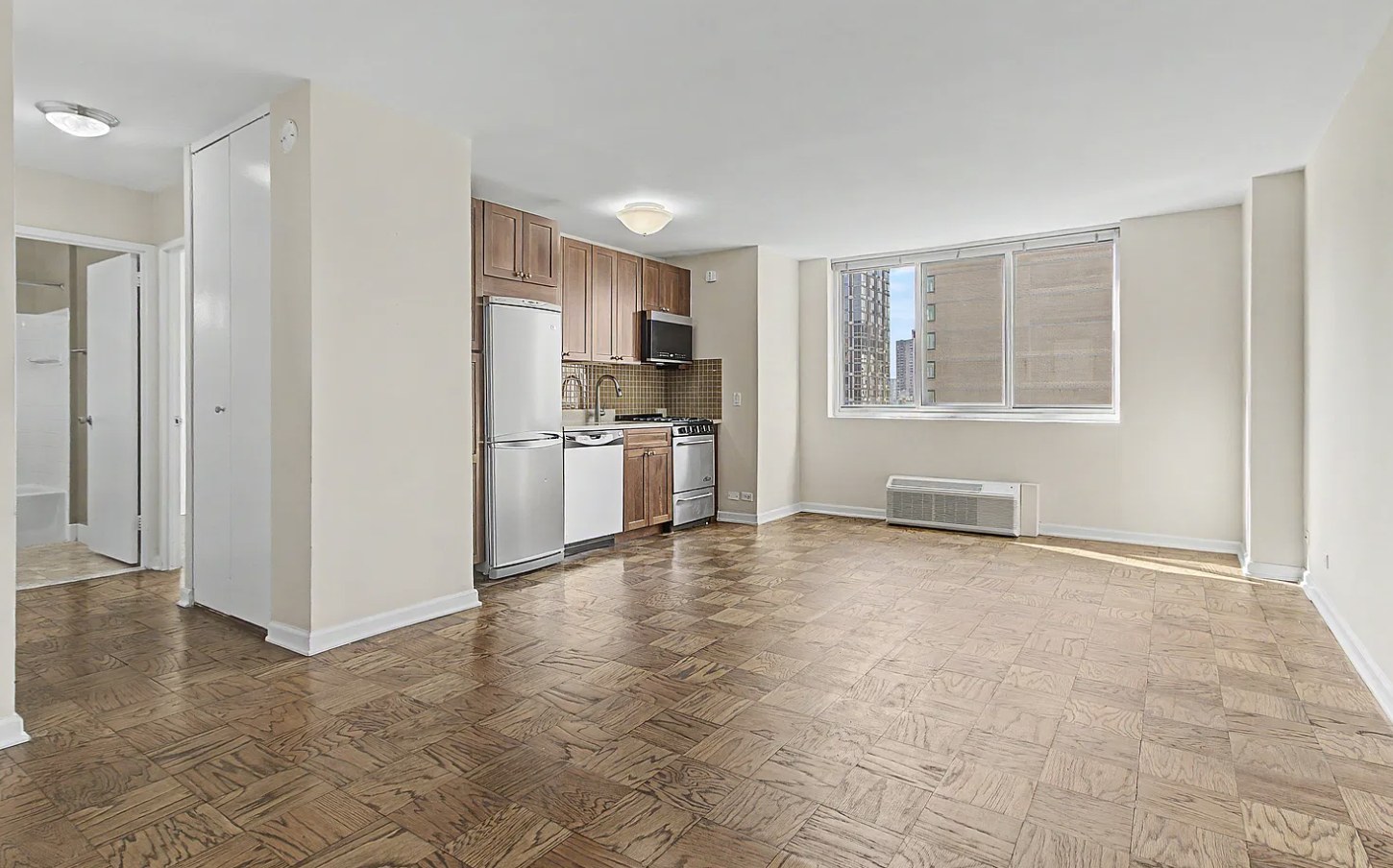
- Condos are the easier path, because many co-ops ban or restrict part-time owners. An apartment priced like the $525,000 Yorkville one-bedroom above is under the $1 million mansion tax line and, on current rules, very unlikely to reach the surcharge threshold.
A pied-à-terre is a second home in the city that you use part of the year. On the Upper East Side it is often a studio or one-bedroom, like the Yorkville apartment above, bought for work trips, family visits or weekends in town. It is also a purchase where the rules that matter are not in the listing. A co-op may not allow part-time owners. A new city surcharge may apply. And your days in New York can change your income tax. This checklist covers what to confirm before you offer. Rules and figures are as of October 8, 2026.
What should you check before buying a pied-à-terre on the Upper East Side?
- Building rules. Confirm the building allows part-time owners.
- The city surcharge. Find out whether New York City's new non-primary-residence tax applies.
- Tax residency. Count your days so the apartment does not make you a New York taxpayer.
- Financing. Price a second-home loan, or the co-op's own down payment rules.
- Renting. Learn what the building and the city allow when you are away.
- Cost per night. Divide the yearly carrying cost by the nights you will use it.
- Empty-apartment readiness. Check staff, access and leak protection.
- Your exit. Look at flip tax, transfer taxes and who can buy from you.
1. Does the building allow a pied-à-terre?
This is the first filter, because it decides which apartments you can buy at all. Co-op rules on part-time use are strict. Many co-ops disallow pieds-à-terre and others let the board decide case by case, according to StreetEasy. Boards generally want owners who live in the building full time, and an unattended apartment can hide damage such as leaks. Condos typically need no special approval for part-time use.
Be direct about your plans. CityRealty advises telling the board how often you will use the unit and who will have access while you are away. If a co-op lists its pied-à-terre policy in the marketing materials, read it. If it does not, ask the managing agent for the policy in writing and read the proprietary lease and house rules.
| Question | Co-op | Condo |
|---|---|---|
| Part-time use | Many ban it; others decide case by case | Typically no special approval |
| Approval | Board package and interview | Most close without a personal review; some hold a right of first refusal |
| Renting it out | Often one to two years within any five- to seven-year period | Set by the building; read the rules |
| Closing costs | No mortgage recording tax or title insurance | Both apply on financed purchases |
| Price for a similar apartment | Usually lower | Usually higher |
Many part-time buyers choose condos for this reason, even when they would qualify for a co-op. Our guides to co-op or condo and the co-op board package cover the full comparison and what a board reviews.
2. Does New York City's new pied-à-terre surcharge apply?
New York enacted a pied-à-terre law in May 2026. The NYC Department of Finance (DOF) now charges an annual surcharge on condos and co-ops that are not a primary residence, based on the city's value of the unit, not your purchase price. For the 2026-27 and 2027-28 tax years it applies at a city value of $1 million or more. From July 2028 the threshold rises to $5 million and the rates fall, and the law is set to expire June 30, 2031 unless it is extended, per Holland & Knight.
| Tax years | DOF value | Annual rate |
|---|---|---|
| 2026-27 and 2027-28 | $1 million to under $3 million | 4.00% |
| 2026-27 and 2027-28 | $3 million to under $5 million | 5.25% |
| 2026-27 and 2027-28 | $5 million or more | 6.50% |
| From 2028-29 | $5 million to under $15 million | 0.80% |
| From 2028-29 | $15 million to under $25 million | 1.05% |
| From 2028-29 | $25 million or more | 1.30% |
The first set of rates is from the DOF. The 2028-29 rates are from law-firm summaries of the statute and could change with city rules.
The city's value matters more than the rate. DOF values condos and co-ops as income-producing rentals, and that value can sit far below the sale price. One law firm's example: a condo worth $10 million with a city value of $2 million owes $80,000 a year, and a $4 million co-op with a city value of $800,000 owes nothing for the first two years, per Willkie. Practitioner summaries also describe the rate as applying to the whole value, not just the slice above each threshold, so a unit that crosses $3 million or $5 million costs noticeably more. Ask your attorney to confirm how DOF computes it.
An apartment like the one pictured, asking $525,000, is under the $1 million line for the state mansion tax. On current rules it is also very unlikely to carry a city value that reaches the surcharge threshold. Confirm that for any specific unit before you sign.
Who is exempt?
The surcharge generally does not apply when the unit is the primary residence of an owner, an immediate family member (spouse, child, sibling, parent, grandparent or grandchild), or a tenant under a bona fide, arm's-length lease of at least one year. A person can have only one primary residence, so a second home you use part-time is exposed if its value crosses the threshold. A long-term tenant can remove the surcharge, but then it is no longer a pied-à-terre.
Where does the law stand today?
The surcharge is in force but contested. On September 29, 2026, a Staten Island judge ruled that the city had to restart its rollout, in a case about how the city identified owners and not about whether the tax is legal, per Inman. The city appealed, and an appeals court has since frozen the order so the city can continue while the judges review it. A decision is expected by November 10, per Briefs. The first charges are due on the property tax bill of January 1, 2027, and the city has told the court it will not invoice before November 15. Separate lawsuits argue the tax is unconstitutional because it singles out nonresidents. Budget as if it applies, and expect details to change.
What to ask before you offer
- What is the DOF value of this specific unit, and is it near $1 million, $3 million or $5 million?
- Did the seller receive a DOF notice or apply for an exemption?
- For a co-op, how will the board pass the charge on? DOF bills the co-op corporation, and the board forwards it to the shareholder.
Our cost-to-buy guide shows how the surcharge fits with closing costs and monthly charges.
3. Will owning a pied-à-terre make you a New York taxpayer?
It can. A person who is not domiciled in New York is still treated as a resident for income tax if both of these are true: they maintain a permanent place of abode in the state for substantially all of the tax year, and they spend 184 days or more in New York during the year. Any part of a day counts as a day, and you do not need to be at the apartment for the day to count, per the New York State Department of Taxation and Finance.
A permanent place of abode is a building where a person can live that you permanently maintain and that is suitable for year-round use, whether or not you own it. An Upper East Side apartment you keep for your own use usually fits. Domicile is different: you can have only one, and it changes only with clear and convincing evidence of a move.
The practical point is the day count. Connecticut and New Jersey buyers who work in Manhattan most weekdays can approach 184 days on workdays alone, so the apartment may be the factor that tips them over. Keep a day log from the first month, and ask a New York CPA to review your situation before you close.
4. How will you finance it?
A pied-à-terre is financed as a second home. Lenders typically require at least 10% down, and more if your credit or debt-to-income ratio is weaker. Second-home rates typically run 0.25 to 0.50 percentage points above primary-residence rates. You must use the home part of each year, and you cannot count projected rent to qualify, per The Mortgage Reports. At the 7.28% average rate in our rates guide, that premium would put a second-home loan at roughly 7.5% to 7.8%. Your lender sets the actual rate.
Co-ops add their own layer. Many require a larger down payment than the typical 20%, and some require cash reserves after closing, so ask each building for its limits before you make an offer. Peter can introduce you to a New York agent who knows which buildings are flexible, and your lender and attorney should review the building's financing rules early.
5. Can you rent it out when you are away?
Less than most buyers expect. Co-ops usually cap rentals at one to two years within any five- to seven-year period, per CityRealty, and many allow only immediate family as guests. Condo rules vary by building.
Short-term rentals are largely off the table. New York City prohibits renting an entire apartment for fewer than 30 days. A short stay is legal only when the host lives in the unit with the guests, and the limit is two guests, per the NYC Office of Special Enforcement. Lenders also limit renting on second-home loans, and a unit rented full time becomes an investment property with higher rates. Plan on an apartment that sits empty when you are not there.
6. What does each night in the apartment really cost?
A pied-à-terre is a bet on how often you will use it, so work out the cost per night before you fall for a floor plan. Add the yearly maintenance or common charges, property tax if it is billed separately (condos), insurance, utilities, any surcharge and your loan interest. Divide by the nights you expect to stay. Co-op maintenance often includes property tax, and condo owners pay it separately, as covered in our cost guide.
| Nights used per year | Cost per night |
|---|---|
| 20 | $1,500 |
| 40 | $750 |
| 80 | $375 |
| 120 | $250 |
The $30,000 figure is an assumption to show the math. Replace it with the building's real numbers, and add the return you give up on your down payment. If the result is higher than what you would pay for hotels or short stays at the times you actually travel, owning may not be the cheaper choice.
7. Is the building set up for an apartment that sits empty?
Look at how the building runs when you are not there. A doorman or full-time staff can accept packages and watch the unit, and a resident superintendent can respond to a leak. In Yorkville, pre-war walk-ups are often lower priced but come without an elevator and with fewer services, while condos and full-service towers offer more staff, per our Yorkville housing guide.
- Access. Ask who holds a key, how the building handles deliveries and how it reaches you in an emergency.
- Guests. Many buildings allow only immediate family as guests when the owner is away. Ask for the guest policy.
- Move-in and renovation. Application and move-in fees run about $1,000 to $2,000 in our cost guide, and renovation rules can limit what you do to a small apartment.
- Insurance. Ask an insurance broker what covers the unit and your liability while you are away.
8. What is your exit?
Look at the sale before you buy. Some co-ops charge a flip tax, commonly 1% to 3% of the price, and sellers usually pay the transfer taxes, both covered in the cost guide. A building that limits part-time owners also limits who can buy from you, so a restrictive co-op can narrow your resale market. The surcharge adds a new question for the next buyer, and the law's 2031 expiration means the rules may differ when you sell. Hold the apartment long enough to cover the transaction costs on both ends.
Which Upper East Side neighborhood suits a pied-à-terre?
- Lenox Hill. The closest part of the Upper East Side to Midtown, with eight subway lines and a hospital district on York Avenue. A fit for buyers in town for work or medical care.
- Carnegie Hill. The northwest corner near Central Park, four Fifth Avenue museums and the Reservoir loop. A fit for buyers who want a quieter, park-side base.
- Yorkville. The widest range of building types, with smaller walk-up and older co-op apartments often the most accessible way in, as in the one pictured. See our Yorkville vs. Carnegie Hill comparison.
How do you start?
Tell us your budget, how often you plan to use the apartment and whether you prefer a condo or a co-op. We match you with a licensed New York agent who knows which buildings welcome part-time owners, and your attorney, lender and CPA fill out the team. Submit a private inquiry below.
General information only, not legal, tax or financial advice. The pied-à-terre surcharge is subject to litigation and city rulemaking, and rates, valuations and deadlines may change. Confirm each point with your New York attorney, lender and tax professional.
Frequently asked questions
Can you buy a pied-à-terre in an Upper East Side co-op?
Sometimes. Many co-ops ban pieds-à-terre and others decide case by case, so ask before you tour. Condos usually need no special approval for part-time use. Tell your agent early how often you will use the apartment so you only see buildings that allow it. See also: Co-op or Condo on the Upper East Side.
Does New York City's pied-à-terre tax apply to apartments under $1 million?
Not on current rules. The city's surcharge applies to condos and co-ops with a city-assessed value of $1 million or more that are not a primary residence. That value is set by the Department of Finance and is often well below the sale price. From July 2028 the threshold rises to $5 million. Ask your attorney to confirm the city's value for the specific unit. See also: What It Costs to Buy on the Upper East Side in 2026.
How many days can I spend in New York before I owe New York income tax?
New York treats you as a resident for income tax if you keep a permanent place of abode in the state for substantially all of the year and spend 184 days or more in New York. Any part of a day counts as a day. A pied-à-terre usually counts as a permanent place of abode, so track your days and ask a CPA before you buy.
Can I rent out my pied-à-terre on Airbnb?
No, not while you are away. New York City prohibits renting an entire apartment for fewer than 30 days. A short stay is legal only when the host lives in the unit with the guests, up to two guests. Co-ops also cap longer rentals, often at one to two years within any five- to seven-year period.
Can I get a mortgage for a pied-à-terre?
Yes, through a second-home loan. Lenders typically require at least 10% down, more with weaker credit, and rates typically run 0.25 to 0.50 percentage points above primary-residence rates. You must use the home part of the year and cannot count projected rent to qualify. Co-op boards also set their own down payment and reserve rules. See also: Upper East Side Prices vs. Mortgage Rates.
Is a condo or a co-op better for a pied-à-terre?
A condo is usually the easier path because most condos do not review part-time use or buyers' finances the way co-ops do. A co-op can cost less, but many ban or limit pieds-à-terre, cap rentals and require a board interview. Condo closing costs run higher because of mortgage recording tax and title insurance on financed purchases.
Sources
- NYC Department of Finance: Non-primary residence surcharge
- Holland & Knight: New York State enacts pied-à-terre tax on expensive non-primary New York City residences
- Willkie Farr & Gallagher: The price of a NYC address just went up
- Inman: Pied-à-terre tax, judge orders NYC to redo rollout amid new suits
- Briefs: Appeals court lets NYC move ahead with pied-à-terre surcharge
- New York State Department of Taxation and Finance: Residency FAQs
- NYC Office of Special Enforcement: What is Local Law 18
- StreetEasy: What is a pied-à-terre?
- CityRealty: Pied-à-terre guide
- The Mortgage Reports: Second home mortgage requirements
Ready to look on the Upper East Side?
Peter is a Connecticut-licensed REALTOR® who introduces buyers to licensed New York agents. Tell him your budget and building type and he will match you with the right one.
October 2026
Yorkville vs. Carnegie Hill: Which Upper East Side Neighborhood Fits?
Two very different ways to live on the Upper East Side, and the questions that decide between them.
Read →October 2026
Co-op or Condo on the Upper East Side: How to Choose
What you actually own, how approval and financing differ, and which buyers each structure suits.
Read →October 2026
What Goes Into a Co-op Board Package
The documents co-op boards ask for, how the review works, and how to prepare before you make an offer.
Read →October 3, 2026
How Much Does It Cost to Buy an Apartment on the Upper East Side in 2026? Price, Closing Costs, Taxes and Monthly Fees
Upper East Side prices, buyer closing costs, the mansion tax, monthly charges and the new pied-à-terre surcharge for co-op and condo purchases, with 2026 figures.
Read →October 4, 2026
Manhattan Sales Rise as Inventory Shrinks: What the Third Quarter 2026 Numbers Mean for Upper East Side Buyers
Manhattan closed sales rose 8% and listings fell 10.7% in the third quarter of 2026 while the median price held at a record $1.25 million. What it means for Upper East Side buyers.
Read →October 5, 2026
Rent vs. Buy on the Upper East Side in 2026: When Does Owning Beat Renting?
A $4,500 rent costs $54,000 a year. See what ten years of renting and owning cost on the Upper East Side and when owning breaks even at 2026 rents and mortgage rates.
Read →October 6, 2026
Will Upper East Side Prices Fall to Offset 7% Mortgage Rates? What Buyers and Sellers Should Do
Prices would have to fall 41% to offset a 7.28% mortgage rate against the 2021 low. Practical moves for Upper East Side buyers and sellers in the 2026 market.
Read →October 7, 2026
How to Buy an Apartment on the Upper East Side as an Out-of-State Buyer: A Step-by-Step Guide for 2026
The steps, deposit, timeline and costs to buy an Upper East Side apartment if you live outside New York, from preapproval and attorney to board approval and closing.
Read →October 9, 2026
Upper East Side Maintenance, Common Charges and Hidden Fees in 2026: What You Pay Every Month After You Buy
What co-op maintenance and condo common charges cover, what they leave out, typical Upper East Side ranges, and how to spot special assessments before you buy.
Read →