
Peter Tumbas
REALTOR® · Berkshire Hathaway HomeServices New England Properties
- At a Manhattan co-op closing you exchange funds for new shares and a proprietary lease, not a deed. The seller's stock certificate and lease are canceled and new ones issued, the seller's loan is paid off, costs and adjustments are settled and you get the keys. The meeting runs about one to three hours and usually comes 10 to 14 days after board approval, 2 to 4 months after contract.
- On a $675,000 co-op with 20% down, you pay a $67,500 deposit at contract and roughly $74,850 to $84,450 at closing. Do a walk-through, confirm names, amounts and payees in writing, and keep your move date flexible.
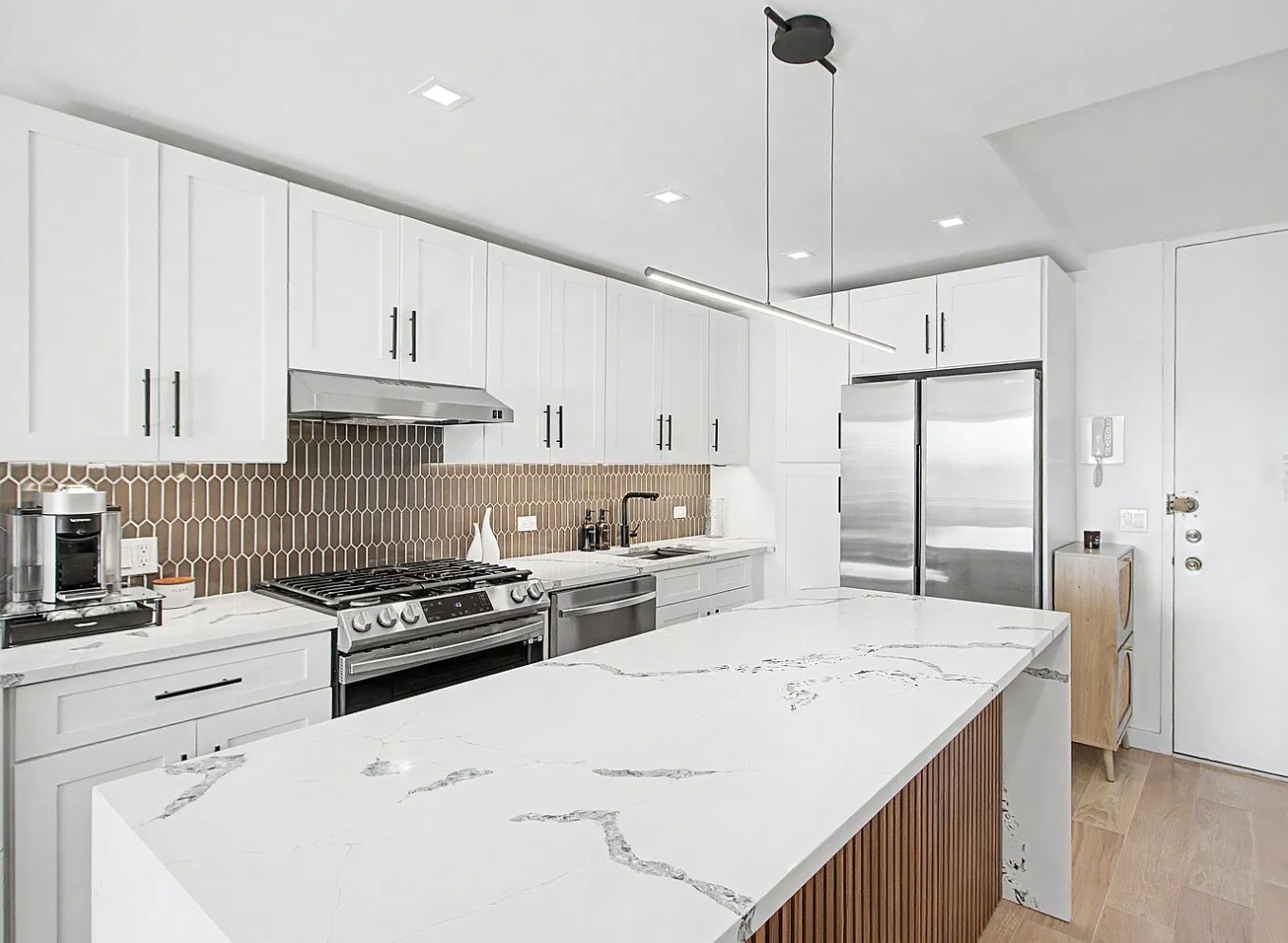
A co-op closing is the last step after months of offers, paperwork and board review, and it works differently from buying a house. You are not signing a deed. You are exchanging shares in the building's corporation and a proprietary lease for your money, with several parties at the table. This guide explains what happens, the documents involved, when your cash is due, the timeline after board approval, and a checklist for the days before and the day of closing. The worked example is a $675,000 Yorkville one-bedroom like the one pictured. We do not know that building's maintenance or rules, so the figures use stated assumptions. Figures are as of October 22, 2026.
What actually changes hands at a co-op closing?
Co-op ownership is shares in a corporation, and the proprietary lease comes with them. At closing the seller's stock certificate and lease are surrendered and canceled, and new shares and a new lease are issued to you, according to Habitat magazine. There is no recorded deed. Co-op closings usually take place at the managing agent's office, a New York City broker guide notes, while condo closings usually take place at a law office or title company.
If you borrow, the lender's interest is recorded against your shares and lease rather than a mortgage on real property. A 2008 Mortgage Professional article on co-op lending describes a recognition agreement among the bank, you and the co-op corporation, and a UCC financing statement filed before closing. If the seller has a loan, a UCC termination statement releases that lien. Lending practice may have changed since 2008, so ask your attorney which documents your lender requires.
Other items on the table include the seller's payoff of any loan, the closing statement and the adjustments. A co-op sale uses a lien search in place of title insurance. Our cost guide puts the co-op lien search at $350 to $450.
When is your cash due?
The table uses 20% down, a 10% contract deposit, and the co-op closing-cost ranges in our cost guide. The mansion tax does not apply below $1 million, and co-ops skip the mortgage recording tax. See our out-of-state guide for the 10% deposit.
| When | What | Amount |
|---|---|---|
| Contract signing | 10% deposit, held in escrow by the seller's attorney | $67,500 |
| Closing | Rest of the 20% down payment | $67,500 |
| Closing | Closing costs: lender fees, both attorneys, building fees and lien search | $7,350 to $16,950 |
| Closing | Cash due at the table | $74,850 to $84,450 |
| Total cash | Down payment plus closing costs | $142,350 to $151,950 |
Closing costs are the co-op fee ranges in our cost guide, with the bar drawn at the high end. Illustration, not a quote. Data as of October 22, 2026.
Your mortgage is $540,000. At 7.28% over 30 years, principal and interest is about $3,695 a month. With maintenance assumed at 3.6% of the price a year, or $2,025 a month, housing cost is about $5,720. Boards also look at the cash you keep after closing, which is on top of these amounts. See the down payment guide. The closing statement also includes adjustments for items such as maintenance, assessments and sometimes fuel charges, split between buyer and seller by closing date, per a New York City broker guide. Your attorney sends an estimated closing statement a few days before closing.
How long does it take from board approval to closing?
A New York law firm puts the whole path from contract delivery to closing at 2 to 4 months for a Manhattan co-op. Brick Underground says closing typically comes 60 to 90 days after the contract is signed. The steps after the contract follow our board interview guide: the buyer has about 30 days to submit the board application and mortgage commitment letter, the board decides after review and an interview, approval typically comes within 1 to 3 business days of the interview, and closing is usually scheduled about 10 to 14 days after approval. The same law firm says most Manhattan and Brooklyn deals do not close on the date written in the contract, so keep your moving and rate-lock plans flexible. Holidays, board members' vacations and tighter lending standards are among the causes it lists.
What should you check at the final walk-through?
The walk-through happens in the days before closing or right before it. Brick Underground says to confirm that:
- Nothing has changed since you last saw the apartment, including damage from movers.
- Items the contract says stay, such as window treatments and light fixtures, are still there.
- Agreed repairs are done.
- Appliances work, and every outlet. Bring something to plug in.
- Toilets and faucets work, hot and cold.
Raise any problem before you close. After closing, see our renovation guide and maintenance guide.
What is the closing-day checklist?
- A few days before: review the estimated closing statement with your attorney, and ask for a checklist of who delivers what.
- The last business day before: confirm the time, date and location in writing, and confirm amounts and payees for any certified checks. Errors on certified checks are a common delay.
- Names: make sure names match exactly on the sales application, loan application and corporation documents. One law firm's checklist says name errors affect about one in five contracts.
- Bring: photo ID, your commitment letter and rate-lock documents, and your loan officer's phone number.
- Powers of attorney: if you will not attend, have the document reviewed by all parties beforehand.
- At the table: sign, fund and receive your new stock certificate and lease, and the keys. The meeting runs about one to three hours.
What can delay a co-op closing?
A Co-op & Condo Monthly checklist lists wrong closing times or locations, unacceptable powers of attorney, errors on certified checks, unresolved arrears or repair disputes, unsettled walk-through issues and missing documents. A missing original stock certificate can be costly: Habitat reports the co-op may require a bond that could cost thousands of dollars. That is mainly a seller problem, but your attorney should confirm the certificate and lien search early. Move-in rules are the other trap, so ask the managing agent about elevator reservations, move-in hours and deposits before moving day.
How do you start?
Tell us your budget, neighborhood and how soon you want to close. We match you with a licensed New York agent who works Yorkville, Carnegie Hill or Lenox Hill, plus a lender and attorney who handle co-ops. Submit a private inquiry below.
General information only, not legal, tax or financial advice. Closing practices and costs vary by building, lender and attorney, and some sources cited here are older. The worked example is an illustration with stated assumptions, not a quote or a statement about the Yorkville listing in the photo. Peter is licensed in Connecticut and does not represent buyers in New York. Confirm every step with your New York attorney and lender.
Frequently asked questions
What happens at a co-op closing?
The buyer's and seller's attorneys, the lender's representative and often the managing agent exchange documents and funds. The seller's stock certificate and proprietary lease are surrendered and canceled and new ones are issued to you, the seller's loan is paid off, costs and adjustments are settled, and the seller hands over the keys. In a co-op there is no recorded deed.
How long does a co-op closing take?
The closing meeting itself typically runs one to three hours, depending on the source. The whole process from signed contract to closing commonly takes 2 to 4 months for a co-op, because board approval adds steps. Closing is usually scheduled about 10 to 14 days after the board approves. See also: Out-of-State Buyer Guide.
Do you have to attend your co-op closing?
Not always. Buyers usually attend but can skip it by giving their lawyer power of attorney, per Brick Underground. A power of attorney should be reviewed by all parties before closing, because an unacceptable one is a common cause of delay.
How much cash do you need at a co-op closing?
On a $675,000 co-op with 20% down, the 10% deposit of $67,500 is due at contract signing. At closing you pay the other $67,500 of the down payment plus closing costs of about $7,350 to $16,950, so roughly $74,850 to $84,450 at the table. Many boards also want cash reserves after closing. See also: What It Costs to Buy on the Upper East Side in 2026, How Much Down Do You Need for a Co-op?.
What should you check at the final walk-through?
Check that nothing has changed since you last saw the apartment, including damage from movers, that agreed repairs are done, that items the seller agreed to leave are still there, and that appliances, outlets, toilets and faucets work. Raise any problem before you close, not after.
What delays co-op closings?
Common causes include names that do not match across documents, the wrong time or location, unacceptable powers of attorney, errors on certified checks, unresolved arrears or repair disputes, unsettled walk-through issues and missing documents at the table. A missing stock certificate can also cost time and money.
Do co-op closings have title insurance?
Usually not. You are buying shares and a proprietary lease, not real property, so a lien search replaces title insurance. Our cost guide estimates a co-op lien search at $350 to $450, versus $4,000 to $4,500 for title insurance on a condo. See also: Co-op or Condo on the Upper East Side.
Sources
- Evans & Nye: Buying or Selling a Manhattan Co-op, from contract to closing (updated May 5, 2026)
- The New York City Broker: How to prepare for a co-op or condo closing in Manhattan (updated July 13, 2026)
- Brick Underground: What to expect at the final walkthrough and on closing day
- Co-op & Condo Monthly: Ten steps to a smooth closing
- Habitat magazine: What a missing stock certificate can cost you
- Dilendorf Khurana: Co-op closing process
- Mortgage Professional: Co-op lending, by Julie Teitel (February 1, 2008)
Buying in Yorkville?
Peter is a Connecticut-licensed REALTOR® who introduces buyers to licensed New York agents. Tell him your budget and building type and he will match you with the right one.
October 2026
Yorkville vs. Carnegie Hill: Which Upper East Side Neighborhood Fits?
Two very different ways to live on the Upper East Side, and the questions that decide between them.
Read →October 2026
Co-op or Condo on the Upper East Side: How to Choose
What you actually own, how approval and financing differ, and which buyers each structure suits.
Read →October 2026
What Goes Into a Co-op Board Package
The documents co-op boards ask for, how the review works, and how to prepare before you make an offer.
Read →October 3, 2026
How Much Does It Cost to Buy an Apartment on the Upper East Side in 2026? Price, Closing Costs, Taxes and Monthly Fees
Upper East Side prices, buyer closing costs, the mansion tax, monthly charges and the new pied-à-terre surcharge for co-op and condo purchases, with 2026 figures.
Read →October 4, 2026
Manhattan Sales Rise as Inventory Shrinks: What the Third Quarter 2026 Numbers Mean for Upper East Side Buyers
Manhattan closed sales rose 8% and listings fell 10.7% in the third quarter of 2026 while the median price held at a record $1.25 million. What it means for Upper East Side buyers.
Read →October 5, 2026
Rent vs. Buy on the Upper East Side in 2026: When Does Owning Beat Renting?
A $4,500 rent costs $54,000 a year. See what ten years of renting and owning cost on the Upper East Side and when owning breaks even at 2026 rents and mortgage rates.
Read →October 6, 2026
Will Upper East Side Prices Fall to Offset 7% Mortgage Rates? What Buyers and Sellers Should Do
Prices would have to fall 41% to offset a 7.28% mortgage rate against the 2021 low. Practical moves for Upper East Side buyers and sellers in the 2026 market.
Read →October 7, 2026
How to Buy an Apartment on the Upper East Side as an Out-of-State Buyer: A Step-by-Step Guide for 2026
The steps, deposit, timeline and costs to buy an Upper East Side apartment if you live outside New York, from preapproval and attorney to board approval and closing.
Read →October 8, 2026
Buying a Pied-à-Terre on the Upper East Side in 2026: A Checklist to Run Before You Make an Offer
Co-op rules, the new NYC pied-à-terre surcharge, New York tax residency, second-home financing and rental limits: eight checks to run before you buy a part-time apartment on the Upper East Side.
Read →October 9, 2026
Upper East Side Maintenance, Common Charges and Hidden Fees in 2026: What You Pay Every Month After You Buy
What co-op maintenance and condo common charges cover, what they leave out, typical Upper East Side ranges, and how to spot special assessments before you buy.
Read →October 13, 2026
How to Read a Co-op's Financial Statements Before You Offer: The 10 Numbers Upper East Side Buyers Should Check
Reserves, underlying mortgage, arrears, sponsor-owned units, assessments and audit notes: what each number means, what to look for and the red flags in a co-op building's finances.
Read →October 14, 2026
Manhattan Rents Are Up 7.7% While Rental Listings Shrink: Why Some Upper East Side Renters Should Run the Numbers on Buying
Manhattan median rent is $4,900 and rental listings have fallen 15 months in a row. What the September 2026 rental report shows, what it does not, and when buying is worth a serious look.
Read →October 15, 2026
How Much Down Do You Need for an Upper East Side Co-op? Down Payment, Debt-to-Income and Cash Reserve Rules Explained
Most Upper East Side co-op boards look at three numbers: your down payment, your debt-to-income ratio and the cash you keep after closing. Typical ranges, what counts, and a worked example on a $329,000 one-bedroom.
Read →October 16, 2026
How Much Will You Net Selling an Upper East Side Co-op? Transfer Taxes, Flip Tax, Commission and Closing Costs Explained
What a $1,595,000 Upper East Side sale leaves in your pocket: transfer taxes, flip tax, commission, attorney and building fees, a worked net proceeds table and the tax on your gain.
Read →October 18, 2026
Why Upper East Side Apartments Are Priced at $999,000: How the $1 Million Mansion Tax Line Changes Your Offer
A $999,000 asking price sits $1,000 under the $1 million mansion tax line. What a $1,000,000 bid really costs, the cash needed on a $999,000 two-bedroom, and how buyers and sellers should offer and price.
Read →October 19, 2026
What Happens at an Upper East Side Co-op Board Interview? Questions, Timeline and How to Prepare in 2026
What a co-op board interview is, the questions boards ask, how long approval takes, what a board can and cannot legally do, and a worked number check on a $525,000 one-bedroom.
Read →October 20, 2026
Local Law 11 Façade Inspections and Special Assessments: What Upper East Side Co-op Buyers Should Check Before They Offer in 2026
What NYC's façade inspection law means for a co-op buyer: Safe, SWARMP and Unsafe reports, sidewalk shed rules, how a special assessment could hit your share, and what to ask before you offer.
Read →October 21, 2026
Can You Renovate an Upper East Side Co-op? Alteration Agreements, Board Approval, Costs and Timelines in 2026
What an alteration agreement is, what a board needs before you renovate, the fees and timeline before work starts, what renovation costs per square foot, and what to check before you offer.
Read →October 12, 2026
How to Buy an Apartment Under $500,000 on the Upper East Side in 2026: What You Get, What to Check and the Catches
Three real Upper East Side listings under $500,000, what they cost each month, how much cash you need, first-time buyer loan programs and the co-op catches to check before you offer.
Read →October 23, 2026
Buying a $1.375 Million Upper East Side Co-op: Is It a Jumbo Loan? Down Payment, Mansion Tax and Cash Needed in 2026
Whether a $1.375 million co-op loan is a jumbo, plus the down payment, $13,750 mansion tax, cash to close and monthly cost, with a worked example on a Yorkville two-bedroom.
Read →October 25, 2026
Buying a Newly Renovated Studio on the Upper East Side: What to Check on a $319,000 Yorkville Co-op in 2026
What a "newly renovated" studio co-op does and does not tell you, the documents to request, monthly cost, cash to close and sublet rules, with a worked example on a $319,000 Yorkville studio.
Read →October 28, 2026
Buying a Ground-Lease Co-op in Lenox Hill: Lease Expiration, Rent Resets, Financing and What to Ask Before You Offer in 2026
How a ground-lease co-op works, why the rent reset and lease expiration matter, a real Lenox Hill listing, and cash to close at $1.195 million, with the questions to ask before you offer.
Read →October 29, 2026
How to Make an Offer on an Upper East Side Apartment: Bidding, the Contract, the 10% Deposit and the New 45-Day Co-op Board Clock in 2026
What an offer includes, how negotiation and the contract work, the 10% deposit, contingencies and the new 45-day co-op board clock, with a worked example on a $549,000 Yorkville one-bedroom.
Read →