
Peter Tumbas
REALTOR® · Berkshire Hathaway HomeServices New England Properties
- NYC's Local Law 11, now the Façade Inspection & Safety Program, requires buildings taller than six stories to inspect exterior walls every five years. Reports grade the façade Safe, SWARMP or Unsafe, and an Unsafe grade means a sidewalk shed right away and repair within 90 days. In a co-op the cost reaches shareholders through reserves, a loan, higher maintenance or a special assessment.
- Before you offer, get the latest façade report and grade, the building's Cycle 10 deadline (Cycle 10 runs February 21, 2025 to February 21, 2029), any shed history, the repair scope and how it is funded. Shed permits now renew every 90 days, and penalties after 180 days are expected from early 2027, which pushes boards to finish.
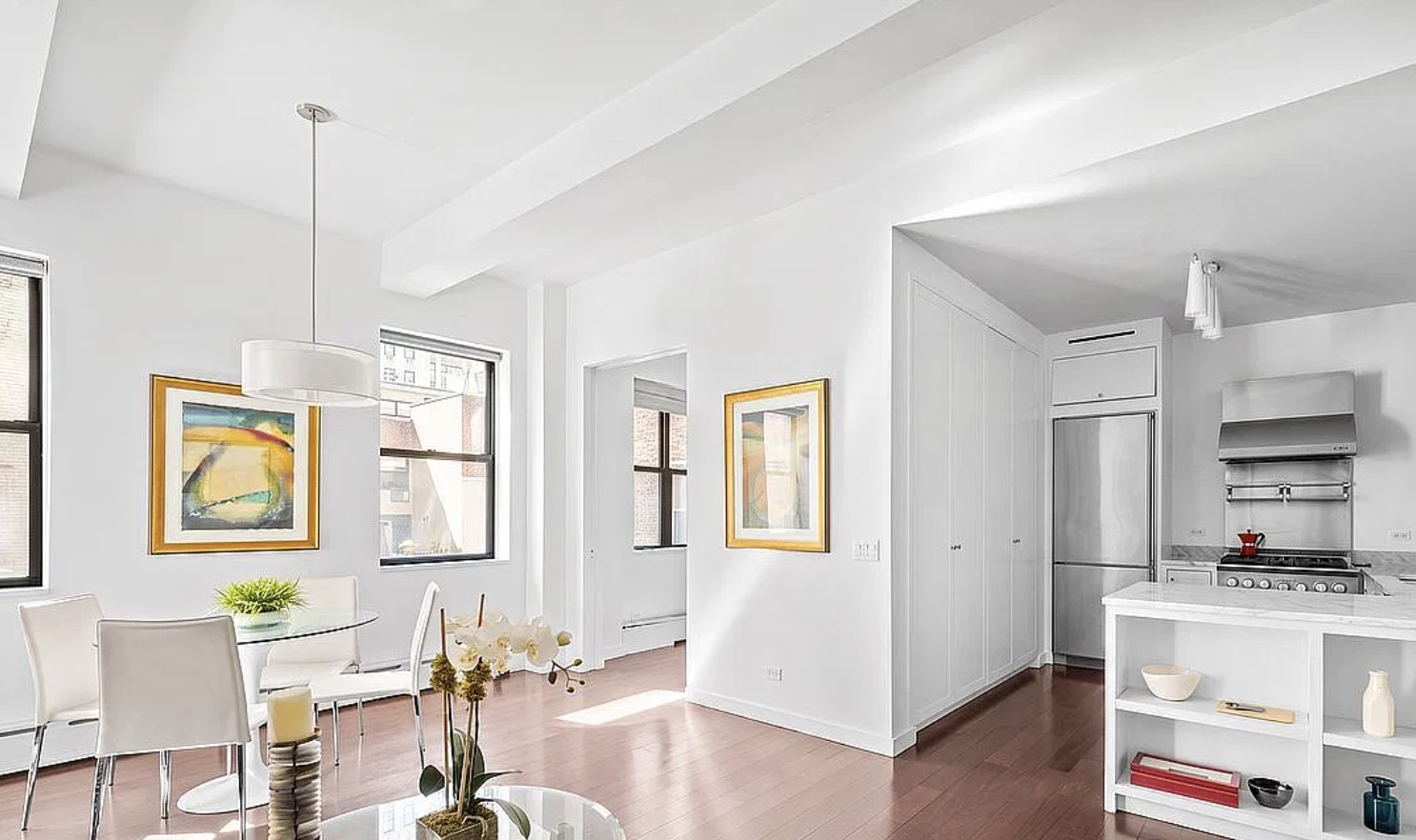
The Lenox Hill two-bedroom pictured above is asking $949,000. Before a buyer prices that apartment, one question belongs on the list: what shape is the building's exterior in, and who pays to fix it? New York City requires periodic façade inspections on taller buildings, the work is expensive, and in a co-op the bill lands on shareholders. This guide explains the inspection law, what the report grades mean, how sidewalk sheds and special assessments reach you, and what to ask before you offer. We do not know this apartment's building, so the examples are illustrations. Figures and rules are as of October 20, 2026.
What is Local Law 11?
Local Law 11 is the name many people still use for the city's Façade Inspection & Safety Program, or FISP. The Department of Buildings says owners of buildings higher than six stories must have exterior walls and attachments inspected every five years and file a technical report. Only a qualified exterior wall inspector, who must be a New York State licensed engineer or registered architect approved by the Department, can do the inspection. A building six stories or shorter is not covered, and the Department says it is the owner's responsibility to confirm whether a building is. It publishes a FISP Universe Map listing covered façades by filing cycle.
What do Safe, SWARMP and Unsafe mean?
Each report grades the façade. The grade tells you how soon money is likely to be spent.
| Grade | What it means | What a buyer should ask |
|---|---|---|
| Safe | No repair needed to keep the exterior sound, and it should not become unsafe in the next five years. | Ask for the report date and whether any construction is under way. A building with ongoing construction cannot be classified Safe. |
| SWARMP | Safe now, but repairs are needed within the next five years to keep it from becoming unsafe. | Ask what the repairs are, when the inspector expects them to be hazardous and how the board plans to pay. |
| Unsafe | A hazardous condition. The owner must protect the public immediately, such as with a sidewalk shed, and repair within 90 days of filing. | Ask for the repair scope, contract and funding. Work that cannot finish and be reported within 104 days needs an extension. |
A SWARMP condition left uncorrected must be reported as Unsafe the next time. Reports also state the cause of each defect and the inspector's projected month and year when a condition becomes hazardous, which is useful to a buyer. Owners who miss a filing deadline or delay repairs face Environmental Control Board violations and penalties, per the Department.
When is the building's next filing due?
Deadlines come in five-year cycles split into sub-cycles by the last digit of the building's block number. Cycle 10 runs from February 21, 2025 to February 21, 2029.
| Sub-cycle | Last digit of block number | Filing window |
|---|---|---|
| 10A | 4, 5, 6, 9 | February 21, 2025 to February 21, 2027 |
| 10B | 0, 7, 8 | February 21, 2026 to February 21, 2028 |
| 10C | 1, 2, 3 | February 21, 2027 to February 21, 2029 |
Ask your attorney or agent for the building's block number and whether its Cycle 10 report is filed. A building that has not filed yet may have repairs ahead of it. A recent Safe report is a better sign than an upcoming deadline.
What do sidewalk sheds have to do with it?
The shed is the visible side of the program. Under city law adopted in 2025, shed permits for façade repairs dropped from one year to three months, penalties of up to $20,000 can apply each time a required timeline is missed, and sheds must be at least 12 feet high and well lit, per Habitat magazine. On August 20, 2026 the city said its shed enforcement rule is now in effect: permits renew every 90 days with a progress report, graduated monthly penalties start after 180 days, and the Department of Buildings expects to begin imposing them in early 2027. Penalties can be paused if the owner shows meaningful progress. The city counted 7,427 permitted sheds on August 17, 2026.
For a buyer the effect is pressure on boards to finish. That can mean a faster project and a faster assessment. Habitat also quotes co-op industry voices saying the changes add cost and administrative work to façade projects.
Are the inspection rules changing?
Partly. The city has proposed moving from five years to six, with hands-on inspections every 12 years for lower-risk, well-maintained buildings, and the Department of Buildings has said it expects to adopt the updates for the cycle beginning in 2030. A 2025 city law also lets the Department set cycles of six to 12 years starting October 1, 2026. We found no final rule changing the five-year cycle as of October 20, 2026, so treat the five-year schedule as current and check the Department's site before you rely on a date.
How does a façade project reach your wallet?
Costs include an engineer or architect, a contractor, sidewalk protection, filing fees and site safety staff, and can reach into the millions, because contractors often find hidden conditions once work starts, per Brick Underground. A board can pay from reserves, borrow, raise maintenance or levy a special assessment, usually shared among shareholders by their ownership share. Delays can add cost: one engineer quoted by Habitat says access agreements with neighboring owners are the main cause, with about 20 projects stalled at any time.
This table is a hypothetical. It shows how a project cost and an apartment's share of the building combine. Check the offering plan or the building's financials for the real share.
| Project cost | 0.5% share | 0.8% share | 1.0% share |
|---|---|---|---|
| $1,000,000 project | $5,000 | $8,000 | $10,000 |
| $3,000,000 project | $15,000 | $24,000 | $30,000 |
| $6,000,000 project | $30,000 | $48,000 | $60,000 |
Illustration only, not any specific building. Real shares and project costs differ. Data as of October 20, 2026.
On a $949,000 purchase at 20% down and 7.28%, principal and interest on the $759,200 loan is about $5,195 a month. A $24,000 assessment equals roughly 4.6 months of that payment, or about $400 a month if the board spreads it over five years. Assessments can be paid as a lump sum or in installments. Ask your attorney who pays an assessment that has already been approved when the contract is signed, since that is a negotiation. Our maintenance guide explains how assessments differ from monthly charges.
What should you ask before you offer?
- Is the building covered? Get the story count and block number, and confirm its Cycle 10 sub-cycle.
- What did the latest report say? Ask for the full report, the grade and the inspector's projected date for any hazardous condition.
- Is a shed up, and since when? Check the permit history and the 90-day renewals.
- What is the repair scope and cost? Ask for the contract, the engineer's estimate and how much has been spent.
- How is it funded? Reserves, a loan, an assessment or higher maintenance each cost you differently.
- Has the building assessed before? Look at past assessments and deferred work in the financial statements. See how to read a co-op's financial statements.
- Who pays what at closing? Have your attorney settle who owes any approved or installment assessment.
- Will the work touch your apartment? Ask about scaffolding, noise and any work at your windows.
A façade problem is not a reason to walk away if the work is funded and the building is well run. It is a reason to price the risk. Use it when you negotiate, and read our board interview guide to see how boards weigh your finances in return.
How do you start?
Tell us your budget, neighborhood and building type. We match you with a licensed New York agent who works Lenox Hill, Yorkville or Carnegie Hill and can pull a building's façade status, assessments and financials before you offer. See the Lenox Hill housing page for building types. Submit a private inquiry below.
General information only, not legal, engineering or financial advice. Rules and enforcement dates change, and some proposals described here are not final. The assessment table is an illustration and not a statement about the apartment in the photo or its building. Peter is licensed in Connecticut and does not represent buyers in New York. Confirm every point with your New York attorney, the building's managing agent and the Department of Buildings.
Frequently asked questions
What is Local Law 11?
Local Law 11 is the New York City law behind the Façade Inspection & Safety Program, or FISP. Owners of buildings higher than six stories must have exterior walls and attachments inspected every five years by a qualified exterior wall inspector and file a technical report with the Department of Buildings. Many people still call the program Local Law 11.
What do Safe, SWARMP and Unsafe mean on a façade report?
Safe means no repair is needed to keep the exterior sound over the next five years. SWARMP, short for safe with a repair and maintenance program, means the façade is safe now but needs repairs within the next five years to avoid becoming unsafe. Unsafe means a hazardous condition that needs immediate protection, such as a sidewalk shed, and repair within 90 days of filing. A SWARMP item left uncorrected must be reported as Unsafe next time.
Can façade work cause a special assessment in a co-op?
Yes. Costs can include an engineer or architect, a contractor, sidewalk protection, filing fees and site safety staff, and can reach into the millions. A board can pay from reserves, borrow, raise maintenance or levy a special assessment on shareholders. Ask which one the building is using before you offer. See also: Maintenance, Common Charges and Hidden Fees.
What is the current Cycle 10 deadline?
Cycle 10 runs from February 21, 2025 to February 21, 2029. A building's sub-cycle depends on the last digit of its block number: 10A (4, 5, 6, 9) files by February 21, 2027, 10B (0, 7, 8) by February 21, 2028 and 10C (1, 2, 3) by February 21, 2029.
How long can a sidewalk shed stay up in 2026?
Shed permits for façade repairs now renew every 90 days with a progress report. The city says its enforcement rule is in effect, with graduated monthly penalties after 180 days and penalties expected to start in early 2027. Penalties can pause if the owner shows meaningful progress.
Does a sidewalk shed mean I should not buy in that building?
Not automatically. A shed can mean the board is fixing a problem. Ask what the report found, who pays, how long the work will take and whether the money is already in reserves. A shed with no plan or funding is a bigger concern than a funded project. See also: How to Read a Co-op's Financial Statements.
Are façade inspection rules changing?
Yes, but not all changes are final. The city's proposals include a six-year cycle and a lower-risk option with hands-on inspections every 12 years, and the Department of Buildings has said it expects to adopt updates for the cycle beginning in 2030. We found no final rule changing the five-year cycle as of October 20, 2026, so check the Department of Buildings before relying on a date.
Sources
- NYC Department of Buildings: Façade Inspection & Safety Program (Local Law 11)
- NYC Department of Buildings: FISP Cycle 10 sub-cycle schedule
- NYC Mayor's Office: sidewalk shed enforcement rule (August 20, 2026)
- Habitat magazine: New sidewalk shed rules pose challenges for co-ops and condos (April 2025)
- Habitat magazine: New rules aim to speed removal of sidewalk sheds (March 9, 2026)
- Thornton Tomasetti: New York City updates FISP (November 19, 2025)
- Cole Schotz: NYC DOB implements changes to sidewalk shed rules (January 22, 2026)
- Brick Underground: Local Law 11 violation and costs (May 28, 2019)
Looking in Lenox Hill?
Peter is a Connecticut-licensed REALTOR® who introduces buyers to licensed New York agents. Tell him your budget and building type and he will match you with the right one.
October 2026
Yorkville vs. Carnegie Hill: Which Upper East Side Neighborhood Fits?
Two very different ways to live on the Upper East Side, and the questions that decide between them.
Read →October 2026
Co-op or Condo on the Upper East Side: How to Choose
What you actually own, how approval and financing differ, and which buyers each structure suits.
Read →October 2026
What Goes Into a Co-op Board Package
The documents co-op boards ask for, how the review works, and how to prepare before you make an offer.
Read →October 3, 2026
How Much Does It Cost to Buy an Apartment on the Upper East Side in 2026? Price, Closing Costs, Taxes and Monthly Fees
Upper East Side prices, buyer closing costs, the mansion tax, monthly charges and the new pied-à-terre surcharge for co-op and condo purchases, with 2026 figures.
Read →October 4, 2026
Manhattan Sales Rise as Inventory Shrinks: What the Third Quarter 2026 Numbers Mean for Upper East Side Buyers
Manhattan closed sales rose 8% and listings fell 10.7% in the third quarter of 2026 while the median price held at a record $1.25 million. What it means for Upper East Side buyers.
Read →October 5, 2026
Rent vs. Buy on the Upper East Side in 2026: When Does Owning Beat Renting?
A $4,500 rent costs $54,000 a year. See what ten years of renting and owning cost on the Upper East Side and when owning breaks even at 2026 rents and mortgage rates.
Read →October 6, 2026
Will Upper East Side Prices Fall to Offset 7% Mortgage Rates? What Buyers and Sellers Should Do
Prices would have to fall 41% to offset a 7.28% mortgage rate against the 2021 low. Practical moves for Upper East Side buyers and sellers in the 2026 market.
Read →October 7, 2026
How to Buy an Apartment on the Upper East Side as an Out-of-State Buyer: A Step-by-Step Guide for 2026
The steps, deposit, timeline and costs to buy an Upper East Side apartment if you live outside New York, from preapproval and attorney to board approval and closing.
Read →October 8, 2026
Buying a Pied-à-Terre on the Upper East Side in 2026: A Checklist to Run Before You Make an Offer
Co-op rules, the new NYC pied-à-terre surcharge, New York tax residency, second-home financing and rental limits: eight checks to run before you buy a part-time apartment on the Upper East Side.
Read →October 9, 2026
Upper East Side Maintenance, Common Charges and Hidden Fees in 2026: What You Pay Every Month After You Buy
What co-op maintenance and condo common charges cover, what they leave out, typical Upper East Side ranges, and how to spot special assessments before you buy.
Read →October 13, 2026
How to Read a Co-op's Financial Statements Before You Offer: The 10 Numbers Upper East Side Buyers Should Check
Reserves, underlying mortgage, arrears, sponsor-owned units, assessments and audit notes: what each number means, what to look for and the red flags in a co-op building's finances.
Read →October 14, 2026
Manhattan Rents Are Up 7.7% While Rental Listings Shrink: Why Some Upper East Side Renters Should Run the Numbers on Buying
Manhattan median rent is $4,900 and rental listings have fallen 15 months in a row. What the September 2026 rental report shows, what it does not, and when buying is worth a serious look.
Read →October 15, 2026
How Much Down Do You Need for an Upper East Side Co-op? Down Payment, Debt-to-Income and Cash Reserve Rules Explained
Most Upper East Side co-op boards look at three numbers: your down payment, your debt-to-income ratio and the cash you keep after closing. Typical ranges, what counts, and a worked example on a $329,000 one-bedroom.
Read →October 16, 2026
How Much Will You Net Selling an Upper East Side Co-op? Transfer Taxes, Flip Tax, Commission and Closing Costs Explained
What a $1,595,000 Upper East Side sale leaves in your pocket: transfer taxes, flip tax, commission, attorney and building fees, a worked net proceeds table and the tax on your gain.
Read →October 18, 2026
Why Upper East Side Apartments Are Priced at $999,000: How the $1 Million Mansion Tax Line Changes Your Offer
A $999,000 asking price sits $1,000 under the $1 million mansion tax line. What a $1,000,000 bid really costs, the cash needed on a $999,000 two-bedroom, and how buyers and sellers should offer and price.
Read →October 19, 2026
What Happens at an Upper East Side Co-op Board Interview? Questions, Timeline and How to Prepare in 2026
What a co-op board interview is, the questions boards ask, how long approval takes, what a board can and cannot legally do, and a worked number check on a $525,000 one-bedroom.
Read →October 12, 2026
How to Buy an Apartment Under $500,000 on the Upper East Side in 2026: What You Get, What to Check and the Catches
Three real Upper East Side listings under $500,000, what they cost each month, how much cash you need, first-time buyer loan programs and the co-op catches to check before you offer.
Read →October 21, 2026
Can You Renovate an Upper East Side Co-op? Alteration Agreements, Board Approval, Costs and Timelines in 2026
What an alteration agreement is, what a board needs before you renovate, the fees and timeline before work starts, what renovation costs per square foot, and what to check before you offer.
Read →October 22, 2026
What Happens at a Co-op Closing in Manhattan? Documents, Cash Due, Timeline and a Closing-Day Checklist for 2026
The documents, cash due, timeline and closing-day checklist for a Manhattan co-op purchase, with a worked example on a $675,000 Yorkville one-bedroom.
Read →October 23, 2026
Buying a $1.375 Million Upper East Side Co-op: Is It a Jumbo Loan? Down Payment, Mansion Tax and Cash Needed in 2026
Whether a $1.375 million co-op loan is a jumbo, plus the down payment, $13,750 mansion tax, cash to close and monthly cost, with a worked example on a Yorkville two-bedroom.
Read →October 25, 2026
Buying a Newly Renovated Studio on the Upper East Side: What to Check on a $319,000 Yorkville Co-op in 2026
What a "newly renovated" studio co-op does and does not tell you, the documents to request, monthly cost, cash to close and sublet rules, with a worked example on a $319,000 Yorkville studio.
Read →October 28, 2026
Buying a Ground-Lease Co-op in Lenox Hill: Lease Expiration, Rent Resets, Financing and What to Ask Before You Offer in 2026
How a ground-lease co-op works, why the rent reset and lease expiration matter, a real Lenox Hill listing, and cash to close at $1.195 million, with the questions to ask before you offer.
Read →October 29, 2026
How to Make an Offer on an Upper East Side Apartment: Bidding, the Contract, the 10% Deposit and the New 45-Day Co-op Board Clock in 2026
What an offer includes, how negotiation and the contract work, the 10% deposit, contingencies and the new 45-day co-op board clock, with a worked example on a $549,000 Yorkville one-bedroom.
Read →