
Peter Tumbas
REALTOR® · Berkshire Hathaway HomeServices New England Properties
- A parent can help three ways: gift the money, guarantee the apartment, or co-purchase and go on the loan and the stock certificate. A gift needs a signed gift letter. A guarantor or co-purchaser needs the building's permission, and some co-ops allow neither.
- On a $925,000 co-op with 20% down, the cash is $185,000 plus about $18,500 in closing costs. A guarantor usually needs income above 40 times the monthly maintenance, which is $111,000 a year on our assumed $2,775. A gift covers cash, not income.
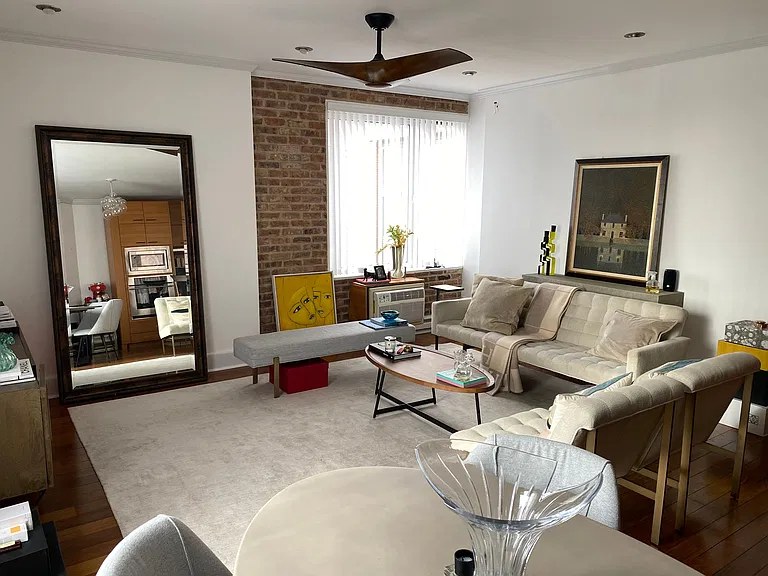
A parent who wants to help a child buy on the Upper East Side has three tools: a gift, a guarantee, or a share of the loan and the title. Each solves a different problem, and each needs the co-op board's permission in a different way. This guide explains how they work, what a board can refuse, the gift tax paperwork and the questions to ask before you view. The worked example is a $925,000 Yorkville one-bedroom like the one pictured. We do not know that building's rules or maintenance, or whether it is a co-op or a condo, so the figures use stated assumptions and treat it as a co-op. Figures are as of October 30, 2026.
What are the ways a parent can help?
Three structures cover most cases, and the word guarantor means two different things. Hauseit says a board guarantor backs the child's maintenance, is not on the stock certificate or the proprietary lease, and does not pay the loan. Milton Coste, in a July 20, 2026 article, describes a non-occupant co-signer who is liable for the whole loan with no ownership stake. When a building says it allows guarantors, ask which one it means.
| Structure | Parent on title? | Parent is liable for | What the board decides |
|---|---|---|---|
| Cash gift | No | Nothing, if the gift letter says no repayment is expected | Whether gifts count toward the down payment and the reserve |
| Guarantor | No | The child's maintenance if the child stops paying, per Hauseit | Whether the building allows guarantors at all |
| Co-purchaser and co-borrower | Yes, on the stock certificate and lease | The loan, maintenance and assessments, jointly with the child | Whether a parent who will not live there can own |
Will the co-op board allow it?
It depends on the building. Milton Coste, in an August 20, 2026 article, says no statute governs guarantors and each co-op sets its policy in its bylaws, proprietary lease and board resolutions. Hauseit adds that a board can reject a buyer for any reason that is not discriminatory and does not have to explain. Not every co-op allows guarantors or co-purchasing, so do not assume yours will. Here is what the sources report boards doing:
- Refusing parent purchases outright. A 2019 Corcoran article on Brick Underground says some co-ops will not let parents buy for children at all, and that some require the child to be fully employed, which rules out students.
- Treating a parent on the deed as a sublet. Milton Coste says that when a parent is on the deed and an adult child lives in the unit, some buildings ask for added disclosures, a separate application for the child, or no co-purchase.
- Setting a high bar for guarantors. Hauseit says guarantor income is usually above 40 times the monthly maintenance. Milton Coste says boards generally expect a guarantor strong enough to carry the apartment alone, with the same complete file as the buyer, including a REBNY financial statement.
- Leaning on guarantors since 2019. Habitat magazine reported in April 2021 that the Housing Stability and Tenant Protection Act of 2019 ended the maintenance escrow arrangements boards once used for marginal buyers. Boards now turn to guarantors, usually a friend or relative.
Milton Coste recommends asking the managing agent about guarantors before you view the apartment. The listing broker is the source for each building's policy. Condos are different: both Milton Coste and Corcoran say they generally add fewer steps than co-ops. Our co-op or condo guide covers the trade-offs.
How does a gifted down payment work?
A gift letter is signed by the donor and states the amount and that no repayment is expected. Fannie Mae's Selling Guide also asks for the donor's name, address, telephone number and relationship to the borrower, and accepts a spouse, child or other dependent, or a person related by blood, marriage, adoption or legal guardianship as a donor. For a one-unit principal residence, the guide says all the funds needed to close can come from a gift. A lender decides whether it will lend. The board is a separate test.
Hauseit says the gift should land in the child's bank account before the board package is submitted, so the board can confirm it was made, and recommends highlighting the deposit line on the statements. The same gift letter used for the mortgage is usually fine for the board package, per Hauseit. The harder question is the reserve. Milton Coste says many buildings allow gifted down payment funds, some allow none, and a building may accept a gift toward the down payment while excluding it from post-closing liquidity. Typical reserves run 12 to 24 months of mortgage plus maintenance, per Milton Coste. Our down payment guide covers the building-by-building differences.
Do gifts trigger gift tax?
The donor generally pays any gift tax, not the child, according to the IRS. The 2026 annual exclusion is $19,000 per recipient, or $38,000 when spouses give together, and Morgan Lewis reports the lifetime gift and estate exemption at $15 million per person. A gift above the annual exclusion is reported on Form 709 and counts against the lifetime exemption. If two parents gave the child the full $185,000 down payment in our example, $38,000 would fall under the annual exclusion and $147,000 would be reported. A tax adviser should confirm how that applies to your family, and your New York attorney should coordinate it with the closing.
What does it cost? A worked example at $925,000
Assume a $925,000 co-op, 20% down, a 30-year fixed rate of 7.28%, the Freddie Mac average in our rates guide, closing costs at 2% of the price and maintenance at 3.6% of the price a year, the same ratio our down payment guide uses. Maintenance is an assumption, since we do not know this building. The apartment is under $1 million, so the mansion tax does not apply.
| Item | Amount |
|---|---|
| Down payment (20%) | $185,000 |
| 10% deposit at contract, part of the down payment | $92,500 |
| Closing costs (2%) | $18,500 |
| Loan amount | $740,000 |
| Principal and interest at 7.28% | $5,063 a month |
| Maintenance (assumed, 3.6% of price a year) | $2,775 a month |
| Monthly total | $7,838 |
| Reserve at 12 months of the monthly total | $94,058 |
| Reserve at 24 months of the monthly total | $188,116 |
| Cash at closing, down payment plus closing costs | $203,500 |
| Cash at closing plus a 24-month reserve | $391,616 |
Closing costs use the 2% planning figure from our down payment guide. A condo adds mortgage recording tax of 1.925% of the loan, about $14,245 here, plus title insurance. Illustration, not a quote. Data as of October 30, 2026.
Now the part a gift does not fix. If a board applies a 25% to 30% debt-to-income target to housing costs alone, the $94,058 a year in housing cost needs income of about $313,500 at 30% or $376,200 at 25%. Our down payment guide describes how boards measure the ratio, and some count all debts. This is why a gift covers the cash, and the income gap is where a guarantor or a co-borrower comes in. A guarantor on this apartment would need income above $111,000, which is 40 times the assumed $2,775 maintenance, and would still file a full financial statement.
Which structure fits which situation?
- The child earns enough and needs cash. A gift, with a letter, a clean paper trail and written confirmation of how the board treats gifts in the reserve.
- The child falls short on income and the building allows guarantors. A guarantor keeps the child as sole owner and keeps the loan off the parent's credit report, per Hauseit. The parent carries the maintenance risk and discloses their finances.
- The building bans guarantors, or the loan needs the parent's income. A co-purchase. Hauseit says banks almost universally require co-purchasers to also be co-borrowers. Milton Coste says the loan then appears on the parent's credit report and counts toward the parent's debt-to-income ratio, and that Fannie Mae allows a non-occupant co-borrower up to 95% loan-to-value through automated underwriting. Boards still expect a much larger down payment.
- The building allows none of these. Look at condos or at a different co-op. A condo often skips the in-person interview and has fewer steps, per Corcoran and Milton Coste.
What should you ask before you view?
Put these to the listing broker or managing agent, and get the answers in writing:
- Does the building allow guarantors, and what income and net worth does it require?
- Does it allow a parent to co-purchase if the parent will not live there?
- Must the child be employed, or can a student or recent graduate qualify?
- Are gifts allowed for the down payment, and do they count toward the reserve?
- Who must attend the interview, and are roommates allowed?
- What is the sublet policy, and does a parent on the deed change how it applies?
How long does it take?
Corcoran's 2019 article says financing can take 60 to 90 days and advises starting in spring if you want a home ready for the fall academic year. Under Local Law 58 of 2026, a covered board has 15 days to acknowledge a complete application and 45 days to decide, but the clock starts only when the application is complete. Submit the guarantor's or co-purchaser's documents with the first package. Our offer guide covers the clock, and our board interview guide covers what to expect when you meet the board.
How do you start?
Tell us your budget, how much the family can put down and who will live in the apartment. We match you with a licensed New York agent who works Yorkville, Carnegie Hill or Lenox Hill, plus a lender and attorney who handle co-ops and family purchases. Parents out of state should read our out-of-state guide first. Submit a private inquiry below.
General information only, not legal, tax or financial advice. Laws, rates and costs change and each building and contract differs. The photo shows a Yorkville one-bedroom, one-bath apartment listed at $925,000; we have not verified its building details, including whether it is a co-op or a condo, and listings can change or sell. Several sources cited are older, so confirm current terms. The worked example is an illustration with stated assumptions, not a quote. Gift tax figures are general and a tax adviser should confirm how they apply to your family. Peter is licensed in Connecticut and does not represent buyers in New York. Confirm every step with your New York attorney and lender.
Frequently asked questions
What is the difference between a guarantor and a co-signer on an Upper East Side co-op?
A board guarantor backs the child's maintenance. Hauseit says the guarantor is not on the stock certificate or the proprietary lease and does not pay the loan. A mortgage co-signer is different. Milton Coste says a non-occupant co-signer is liable for the whole loan with no ownership stake. When a building says it allows guarantors, ask which one it means.
Can parents gift the down payment on an Upper East Side apartment?
Yes, with a signed gift letter stating the amount and that no repayment is expected. Many boards allow gifted down payment funds and some allow none, per Milton Coste. Fannie Mae's guide lets a gift cover all the funds needed on a one-unit principal residence, but the board sets its own rules. Deposit the gift in the child's account before the board package goes in, so the bank statements show it. See also: How Much Down Do You Need for an Upper East Side Co-op?.
Does a gift count toward the cash reserve a co-op board requires?
Not always. Milton Coste says a building may accept a gift toward the down payment and still exclude it from post-closing liquidity, because the reserve is meant to show the applicant's own capacity. Typical reserves run 12 to 24 months of mortgage plus maintenance. On our $925,000 example that is about $94,100 to $188,100. Ask the managing agent in writing how the building treats gifts.
Do parents owe gift tax on money they give a child to buy an apartment?
The donor, not the child, is generally responsible for any gift tax, per the IRS. The 2026 annual exclusion is $19,000 per recipient, or $38,000 for spouses giving together, and the lifetime exemption is $15 million per person. A larger gift is reported on Form 709 and counts against the lifetime exemption. A tax adviser should confirm how it applies to your family.
How much income does a co-op guarantor need?
Hauseit says boards usually want guarantor income above 40 times the monthly maintenance. On a $2,775 monthly maintenance that is $111,000 a year. Milton Coste says boards generally expect a guarantor strong enough to carry the apartment alone, with the same complete file as the buyer, including a REBNY financial statement. Each building sets its own test. See also: How to Read a Co-op's Financial Statements Before You Offer.
What does the co-op board application need from a parent co-purchaser?
A parent who goes on the stock certificate is a purchaser and files as one. Our board package guide lists the documents boards ask for, such as tax returns, bank statements, reference letters and a financial statement. Corcoran's 2019 article says applications typically need several years of tax returns and reference letters for both parent and child. Expect an interview for everyone who will live in the apartment. See also: What Goes Into a Co-op Board Package.
Sources
- Milton Coste: NYC parents co-signing a mortgage, co-purchasing and gifts (July 20, 2026)
- Milton Coste: NYC co-signers and guarantors who are not a parent (August 20, 2026)
- Milton Coste: NYC co-op post-closing liquidity (September 24, 2026)
- Hauseit: Co-purchasing a co-op vs. using a guarantor in NYC (December 16, 2019)
- Hauseit: NYC co-op gift letter (August 30, 2018)
- Brick Underground, sponsored by Corcoran: How to buy a NYC co-op or condo for your adult child (August 16, 2019)
- Habitat magazine: Marginal co-op buyers have lost a trusted key to entry (April 27, 2021)
- Fannie Mae Selling Guide: B3-4.3-04, Personal gifts
- IRS: Frequently asked questions on gift taxes
- Morgan Lewis: IRS announces increased gift and estate tax exemption amounts for 2026 (October 28, 2025)
Helping your child buy in Manhattan?
Peter is a Connecticut-licensed REALTOR® who introduces buyers to licensed New York agents. Tell him your budget and who will live in the apartment and he will match you with the right one.
October 29, 2026
How to Make an Offer on an Upper East Side Apartment: Bidding, the Contract, the 10% Deposit and the New 45-Day Co-op Board Clock in 2026
What an offer includes, how negotiation and the contract work, the 10% deposit, contingencies and the new 45-day co-op board clock, with a worked example on a $549,000 Yorkville one-bedroom.
Read →October 2026
Yorkville vs. Carnegie Hill: Which Upper East Side Neighborhood Fits?
Two very different ways to live on the Upper East Side, and the questions that decide between them.
Read →October 2026
Co-op or Condo on the Upper East Side: How to Choose
What you actually own, how approval and financing differ, and which buyers each structure suits.
Read →October 2026
What Goes Into a Co-op Board Package
The documents co-op boards ask for, how the review works, and how to prepare before you make an offer.
Read →October 3, 2026
How Much Does It Cost to Buy an Apartment on the Upper East Side in 2026? Price, Closing Costs, Taxes and Monthly Fees
Upper East Side prices, buyer closing costs, the mansion tax, monthly charges and the new pied-à-terre surcharge for co-op and condo purchases, with 2026 figures.
Read →October 4, 2026
Manhattan Sales Rise as Inventory Shrinks: What the Third Quarter 2026 Numbers Mean for Upper East Side Buyers
Manhattan closed sales rose 8% and listings fell 10.7% in the third quarter of 2026 while the median price held at a record $1.25 million. What it means for Upper East Side buyers.
Read →October 5, 2026
Rent vs. Buy on the Upper East Side in 2026: When Does Owning Beat Renting?
A $4,500 rent costs $54,000 a year. See what ten years of renting and owning cost on the Upper East Side and when owning breaks even at 2026 rents and mortgage rates.
Read →October 6, 2026
Will Upper East Side Prices Fall to Offset 7% Mortgage Rates? What Buyers and Sellers Should Do
Prices would have to fall 41% to offset a 7.28% mortgage rate against the 2021 low. Practical moves for Upper East Side buyers and sellers in the 2026 market.
Read →October 7, 2026
How to Buy an Apartment on the Upper East Side as an Out-of-State Buyer: A Step-by-Step Guide for 2026
The steps, deposit, timeline and costs to buy an Upper East Side apartment if you live outside New York, from preapproval and attorney to board approval and closing.
Read →October 8, 2026
Buying a Pied-à-Terre on the Upper East Side in 2026: A Checklist to Run Before You Make an Offer
Co-op rules, the new NYC pied-à-terre surcharge, New York tax residency, second-home financing and rental limits: eight checks to run before you buy a part-time apartment on the Upper East Side.
Read →October 9, 2026
Upper East Side Maintenance, Common Charges and Hidden Fees in 2026: What You Pay Every Month After You Buy
What co-op maintenance and condo common charges cover, what they leave out, typical Upper East Side ranges, and how to spot special assessments before you buy.
Read →October 13, 2026
How to Read a Co-op's Financial Statements Before You Offer: The 10 Numbers Upper East Side Buyers Should Check
Reserves, underlying mortgage, arrears, sponsor-owned units, assessments and audit notes: what each number means, what to look for and the red flags in a co-op building's finances.
Read →October 14, 2026
Manhattan Rents Are Up 7.7% While Rental Listings Shrink: Why Some Upper East Side Renters Should Run the Numbers on Buying
Manhattan median rent is $4,900 and rental listings have fallen 15 months in a row. What the September 2026 rental report shows, what it does not, and when buying is worth a serious look.
Read →October 15, 2026
How Much Down Do You Need for an Upper East Side Co-op? Down Payment, Debt-to-Income and Cash Reserve Rules Explained
Most Upper East Side co-op boards look at three numbers: your down payment, your debt-to-income ratio and the cash you keep after closing. Typical ranges, what counts, and a worked example on a $329,000 one-bedroom.
Read →October 16, 2026
How Much Will You Net Selling an Upper East Side Co-op? Transfer Taxes, Flip Tax, Commission and Closing Costs Explained
What a $1,595,000 Upper East Side sale leaves in your pocket: transfer taxes, flip tax, commission, attorney and building fees, a worked net proceeds table and the tax on your gain.
Read →October 18, 2026
Why Upper East Side Apartments Are Priced at $999,000: How the $1 Million Mansion Tax Line Changes Your Offer
A $999,000 asking price sits $1,000 under the $1 million mansion tax line. What a $1,000,000 bid really costs, the cash needed on a $999,000 two-bedroom, and how buyers and sellers should offer and price.
Read →October 19, 2026
What Happens at an Upper East Side Co-op Board Interview? Questions, Timeline and How to Prepare in 2026
What a co-op board interview is, the questions boards ask, how long approval takes, what a board can and cannot legally do, and a worked number check on a $525,000 one-bedroom.
Read →October 20, 2026
Local Law 11 Façade Inspections and Special Assessments: What Upper East Side Co-op Buyers Should Check Before They Offer in 2026
What NYC's façade inspection law means for a co-op buyer: Safe, SWARMP and Unsafe reports, sidewalk shed rules, how a special assessment could hit your share, and what to ask before you offer.
Read →October 21, 2026
Can You Renovate an Upper East Side Co-op? Alteration Agreements, Board Approval, Costs and Timelines in 2026
What an alteration agreement is, what a board needs before you renovate, the fees and timeline before work starts, what renovation costs per square foot, and what to check before you offer.
Read →October 22, 2026
What Happens at a Co-op Closing in Manhattan? Documents, Cash Due, Timeline and a Closing-Day Checklist for 2026
The documents, cash due, timeline and closing-day checklist for a Manhattan co-op purchase, with a worked example on a $675,000 Yorkville one-bedroom.
Read →October 23, 2026
Buying a $1.375 Million Upper East Side Co-op: Is It a Jumbo Loan? Down Payment, Mansion Tax and Cash Needed in 2026
Whether a $1.375 million co-op loan is a jumbo, plus the down payment, $13,750 mansion tax, cash to close and monthly cost, with a worked example on a Yorkville two-bedroom.
Read →October 25, 2026
Buying a Newly Renovated Studio on the Upper East Side: What to Check on a $319,000 Yorkville Co-op in 2026
What a "newly renovated" studio co-op does and does not tell you, the documents to request, monthly cost, cash to close and sublet rules, with a worked example on a $319,000 Yorkville studio.
Read →October 28, 2026
Buying a Ground-Lease Co-op in Lenox Hill: Lease Expiration, Rent Resets, Financing and What to Ask Before You Offer in 2026
How a ground-lease co-op works, why the rent reset and lease expiration matter, a real Lenox Hill listing, and cash to close at $1.195 million, with the questions to ask before you offer.
Read →October 12, 2026
How to Buy an Apartment Under $500,000 on the Upper East Side in 2026: What You Get, What to Check and the Catches
Three real Upper East Side listings under $500,000, what they cost each month, how much cash you need, first-time buyer loan programs and the co-op catches to check before you offer.
Read →