
Peter Tumbas
REALTOR® · Berkshire Hathaway HomeServices New England Properties
- A Carnegie Hill townhouse has no board, no maintenance charge and no flip tax. You own the roof, facade and boiler, pay a full property tax bill and take a jumbo loan, usually with 20% down and documented cash reserves.
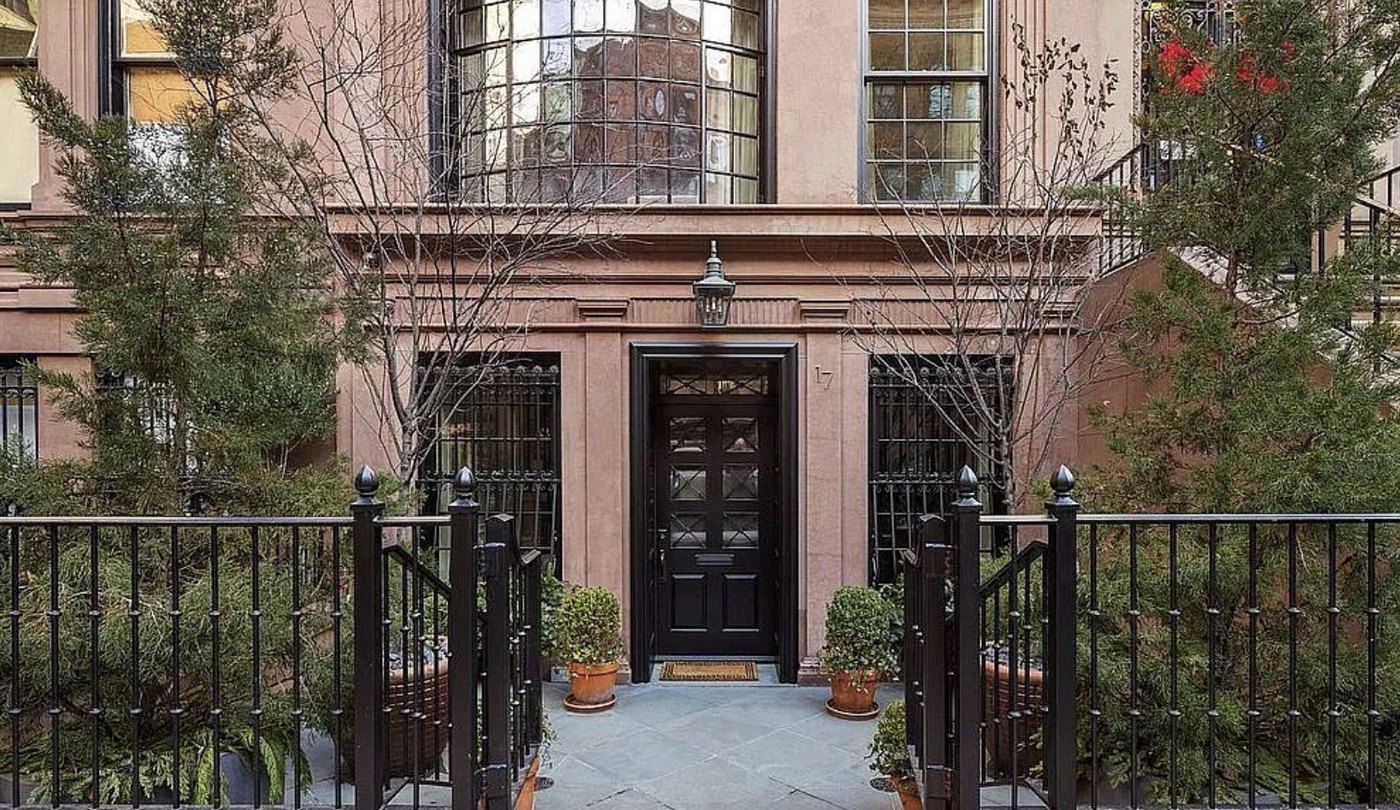
- On the $18.7 million townhouse pictured with 25% down, the mansion tax is $654,500 and the mortgage recording tax on a $14,025,000 loan is $269,981. That is about $924,000 in closing taxes before legal, title and bank fees.
A townhouse is a different purchase from a Carnegie Hill co-op or condo. There is no board to approve you, no monthly maintenance and no building to share the roof, the facade or the boiler. You own all of it, and the closing costs, taxes and financing follow different rules. This guide explains how a townhouse purchase differs, what the market is doing, what it costs, how the loan works and what to check before you offer. The worked example is a four-bedroom townhouse listed just off Fifth Avenue at $18.7 million, like the one pictured. We have not verified its lot size, square footage, legal use or landmark status, so the figures are an illustration. Figures are as of November 17, 2026.
How is buying a townhouse different from buying a co-op?
Almost everything that a co-op buyer pays through the building, a townhouse buyer pays directly. Milton Coste, in an August 31, 2026 guide, says a townhouse carries a full property tax bill with no common charge, and the owner pays heat, hot water, electric and water and sewer directly. The owner also funds roof, facade, boiler and plumbing work and needs a homeowner policy sized to full replacement cost.
| Item | Co-op | Townhouse |
|---|---|---|
| Approval | Board package and interview | No board. Landmark rules still apply to the exterior |
| Monthly charges | Maintenance, which includes a share of the building's property tax | A full property tax bill and no common charge |
| Roof, facade, boiler | The building pays, through maintenance or assessments | The owner pays |
| Mortgage recording tax | None, because a co-op is not real property | 1.925% of a loan of $500,000 or more |
| Title | Lien search | Title insurance |
Our co-op or condo guide covers the apartment side of that choice.
What is the Carnegie Hill townhouse market doing?
Prices are up and the buyer pool is small. The Leslie Garfield mid-year report for 2026 counted 116 Manhattan townhouse sales in the first half, up 4.5%, for $1.2 billion in gross volume, up 31.2%. The average sale price rose 25.5% to $10.5 million. Commercial real estate publication CRE Daily, citing the Garfield and Jonathan Miller reports in an August 17, 2026 story, reported that Upper East Side average sale prices surged almost 49% in the second quarter to just under $14 million, and that part of the rise came from larger homes: the average one- to three-family home sold topped 5,000 square feet, up nearly 15%. Listing inventory remained more than 20% below its decade average.
| Measure | Figure |
|---|---|
| Townhouse sales, first half | 116, up 4.5% |
| Gross sales volume, first half | $1.2 billion, up 31.2% |
| Average sale price, first half | $10.5 million, up 25.5% |
| Average price per square foot, first half | $1,613, up 10.2% |
| Upper East Side average sale price, second quarter | Just under $14 million, up almost 49% |
| Average size sold, second quarter | Over 5,000 square feet, up nearly 15% |
Compare that with apartments. Milton Coste's third quarter 2026 report puts the Upper East Side median apartment price at $1,375,000. The average Upper East Side townhouse price is roughly ten times that. With so few sales, a handful of large deals moves the average, so use averages as context and price your target from comparable sales. Milton Coste says price per square foot hides more than it reveals on a house, and that lot width matters: a 25-foot house is not a 20-foot house with 25% more of everything.
What does it cost? A worked example at $18.7 million
Assume a $18.7 million townhouse, 25% down and a mortgage for the rest. The mansion tax is a buyer-paid tax on any residential purchase of $1 million or more in New York City. Nixon Peabody lists the rate at 3.5% for $15 million to under $20 million, and Milton Coste says the rate applies to the entire price, not the amount above the threshold. A townhouse buyer with a mortgage also pays the mortgage recording tax. Hauseit puts it at 1.925% for loans of $500,000 or more, since the lender typically pays another 0.25%.
| Item | Amount |
|---|---|
| Price | $18,700,000 |
| Down payment (25%) | $4,675,000 |
| Loan amount | $14,025,000 |
| Mansion tax (3.5% of the price) | $654,500 |
| Mortgage recording tax (1.925% of the loan) | $269,981 |
| Closing taxes, those two | $924,481 |
| Cash to close before legal, title and bank fees | $5,599,481 |
| Principal and interest at 7.28%, illustrative | $95,961 a month |
| Property tax ceiling, per month | $19,550 |
| Reserve at 6 months of principal, interest and tax | $693,064 |
| Reserve at 24 months of principal, interest and tax | $2,772,257 |
Title insurance, the attorney and the bank's fees come on top. StreetEasy puts title insurance at 0.5% to 1% of the price and a townhouse buyer's attorney at $2,500 to $5,000, so get quotes at this price. The 7.28% rate is the Freddie Mac average in our rates guide. A jumbo loan is priced by the lender, so the real rate will differ. Our cost to buy guide covers the apartment version of this math.
The mansion tax scale was set in 2019. Lawmakers pitched higher rates in the 2026 state budget, and for $15 million to $20 million the proposal was 4.925%, per The Real Deal. Americans for Tax Reform reports that the increase was left out of the enacted budget. On $18.7 million, 4.925% would have cost $920,975, which is $266,475 more. Confirm the rate with your attorney before you contract.
Property tax and surcharge assume the city's market value equals the $18.7 million price and use the provisional fiscal year 2027 Class 1 rate. Illustration, not a quote. Data as of November 17, 2026.
What do you pay every year?
Property tax. A townhouse is Class 1. The Department of Finance assesses it at no more than 6% of market value and caps assessment increases at 6% a year and 20% over five years, unless the owner makes a physical change such as an addition or renovation. Rosenberg Estis lists the provisional fiscal year 2027 Class 1 rate at 20.909%, up from 19.843% in fiscal 2026. If the city valued our example at $18.7 million and assessed it at the full 6%, the bill would be about $234,599. That is a ceiling. The Department of Finance says most Class 1 properties are assessed below 6% because of the caps. Our example is an upper bound, not a forecast.
The pied-a-terre surcharge. New York City now charges an annual surcharge on one- to three-family homes that are not a primary residence and are valued by the Department of Finance at more than $5 million. For 2026-27 and 2027-28 the rates are 0.8% from $5 million to under $15 million, 1.05% from $15 million to under $25 million and 1.3% above that, per Sheppard Mullin. At $18.7 million that is $196,350 a year if the city value matches the price. A home used as a primary residence is not subject to it, and the city asks owners to document that with tax returns or other proof. The surcharge follows the city's value, not your price. Our pied-a-terre checklist explains the rules and the condo and co-op tiers.
How does financing a townhouse work?
Most townhouse loans at this price are jumbo loans. Milton Coste says a jumbo has a larger down payment, documented post-closing reserves and a lender that keeps the loan. Fifth Third gives 20% as the typical down payment. Reserve requirements vary by lender: Brick Underground quotes six months of the qualifying payment, JetDirect says six to 12 months and Amerisave says 12 to 24 months on New York loans above $1 million. A $14 million loan is far above any conforming limit, so ask each lender for its maximum loan, down payment, reserves and rate before you write an offer.
Ask the lender to quote the house as it is legally configured, not as it is used, per Milton Coste. Lenders can count part of projected rental income if the house has legal rental units, depending on their rules.
Many buyers at this price skip the loan. HGAR's summary of the 2026 state budget reports that about nine in ten New York City transactions above $3 million in the first half of 2025 were cash, and that a proposed 1% tax on all-cash purchases of $1 million or more was dropped from the final budget. Expect to compete with cash. Our jumbo loan guide covers how loan size and down payment interact.
What should you check before you offer?
- Certificate of occupancy and legal use. Milton Coste says New York City did not generally require a certificate of occupancy for buildings completed before January 1, 1938, and that the Department of Buildings can issue a Letter of No Objection in those cases. Hauseit says buyers' attorneys search the DOB's Buildings Information System for permits, complaints, violations and certificates of occupancy.
- Open violations. Open DOB, ECB, HPD and Landmarks violations attach to the property, not the seller, per Milton Coste.
- Landmark status. The Landmarks Preservation Commission designated the Carnegie Hill Historic District on July 23, 1974 and expanded it on December 21, 1993, per the Historic Districts Council. Friends of the Upper East Side describes it as East 86th to East 98th Street between Fifth and Lexington Avenues, with roughly 400 buildings. Milton Coste says exterior changes to front and rear facades generally need an LPC permit, a Department of Buildings permit does not substitute for one, and a Certificate of Appropriateness takes roughly 4 to 12 weeks. Check the pictured house's status on the LPC map before you assume anything.
- An engineer's review. Milton Coste recommends a structural review of the roof, facade, foundation and mechanicals, and puts an inspection at up to $2,500 for a 3,000 to 5,000 square foot building, plus $300 to $500 for a sewer scope. He gives $85,000 to $250,000 or more for a brownstone facade restoration and $15,000 to $40,000 for a roof replacement. A larger or landmarked house costs more to inspect and to repair, so get quotes. Our home inspection guide covers the apartment side.
- Occupancy. Ask whether the house is delivered vacant and write the answer into the contract with a remedy. A verbal promise is not enough. If it has rental units, request the rent roll, the leases and the DHCR registration history, per Milton Coste.
Milton Coste recommends this order: legal status, then physical condition, then occupancy, then financing and closing costs.
How do you start?
Tell us your budget, how you will hold title and whether the house will be your primary residence. We match you with a licensed New York agent who works Carnegie Hill, plus an attorney, an engineer and a lender who handle townhouses at this level. Buyers moving from out of state should read our out-of-state guide first. Submit a private inquiry below.
General information only, not legal, tax, engineering or financial advice. Laws, rates and costs change and each property and contract differs. The photo shows a four-bedroom townhouse listed just off Fifth Avenue at $18.7 million; we have not verified its lot, square footage, legal use or landmark status, and listings can change or sell. The worked example is an illustration with stated assumptions, not a quote, and property tax and surcharge figures assume the city's value equals the price. Several sources are secondary, so confirm rates and rules with your attorney. Peter is licensed in Connecticut and does not represent buyers in New York. Confirm every step with your New York attorney and lender.
Frequently asked questions
Does a Carnegie Hill townhouse need co-op board approval?
No. A townhouse has no board, so there is no board package, interview or financial disclosure to a board. The owner carries every system and pays a full property tax bill with no common charge, per Milton Coste. Landmark rules still apply. The Carnegie Hill Historic District was designated in 1974 and expanded in 1993, and exterior work on the front and rear facades generally needs a Landmarks Preservation Commission permit.
How much is the mansion tax on an $18.7 million townhouse?
The buyer pays 3.5% of the price, or $654,500. New York City taxes residential purchases from $15 million to under $20 million at 3.5%, per Nixon Peabody. Milton Coste says the rate hits the entire price, not the amount above the threshold. Lawmakers pitched higher mansion tax rates in the 2026 budget, per The Real Deal, and Americans for Tax Reform reports the increase was left out of the enacted budget. See also: What It Costs to Buy an Upper East Side Apartment.
Do townhouse buyers pay the mortgage recording tax?
Yes, if they take a mortgage. Hauseit says buyers pay 1.925% on loans of $500,000 or more, since the lender typically pays another 0.25%, and co-op buyers pay none because a co-op is not real property. On a $14.025 million loan that is $269,981. A buyer who pays all cash skips it.
Does the pied-a-terre surcharge apply to a Carnegie Hill townhouse?
It applies to a one- to three-family home that is not a primary residence and has a Department of Finance market value above $5 million. For 2026-27 and 2027-28 the rate is 0.8% from $5 million to under $15 million, 1.05% from $15 million to under $25 million and 1.3% above that, per Sheppard Mullin. A home used as a primary residence is not subject to it. The surcharge follows the city's value, not your price. See also: Pied-a-Terre Checklist for the Upper East Side.
How much are property taxes on a Carnegie Hill townhouse?
A townhouse is Class 1 property. The city assesses it at 6% of market value at most, and assessment increases are capped at 6% a year and 20% over five years unless the owner makes physical changes, per the Department of Finance. The provisional fiscal year 2027 Class 1 rate is 20.909%, per Rosenberg Estis. On an $18.7 million value, the ceiling is about $234,600 a year. Capped bills usually run lower.
What should I check before I offer on a Carnegie Hill townhouse?
Check the certificate of occupancy and legal use, open DOB, ECB, HPD and Landmarks violations, landmark status, the building's condition and, if it has units, the leases and rent roll. Open violations attach to the property, not the seller, per Milton Coste. A structural engineer's review of the roof, facade, foundation and mechanicals is worth its fee. See also: Do You Need a Home Inspection When Buying a Manhattan Co-op?.
Sources
- Milton Coste: NYC townhouse buyer's guide, what apartment buyers miss (August 31, 2026)
- Milton Coste: NYC home inspection guide for co-ops, condos and townhouses (October 29, 2026)
- Milton Coste: Manhattan Q3 2026 market report (October 6, 2026)
- Leslie J. Garfield: Manhattan mid-year report 2026
- CRE Daily: NYC townhouse prices surge as deal volume climbs (August 17, 2026)
- Nixon Peabody: New York increases rates for real estate transfer and mansion taxes (April 4, 2019)
- The Real Deal: New York lawmakers pitch mansion tax in budget bills (March 17, 2026)
- Americans for Tax Reform: New York state budget passed, winners and losers
- HGAR: The 2027 New York State budget, a watershed moment for New York real estate
- Hauseit: The mortgage recording tax in NYC
- StreetEasy: Closing costs for condo and co-op buyers
- Hauseit: Due diligence for buying a house
- NYC Department of Finance: Class 1 property tax guide
- Rosenberg Estis: New York City property tax levy and provisional rates for fiscal year 2027 (July 22, 2026)
- NYC Department of Finance: Non-primary residence property surcharge
- Sheppard Mullin: NYC's new pied-a-terre tax, what property owners need to know
- Historic Districts Council: Carnegie Hill Expanded Historic District
- Friends of the Upper East Side: Carnegie Hill Historic District
- Fifth Third: What is a jumbo loan (July 1, 2026)
- AmeriSave: Jumbo loans in New York, limits and how to qualify
- JetDirect Mortgage: How to qualify for a NYC jumbo mortgage (updated March 1, 2026)
- Brick Underground: How do you qualify for a jumbo loan in NYC?
Buying a townhouse in Manhattan?
Peter is a Connecticut-licensed REALTOR® who introduces buyers to licensed New York agents. Tell him your budget and building type and he will match you with the right one.
November 9, 2026
Do You Need a Home Inspection When Buying a Manhattan Co-op? What to Check Instead, and What Inspectors Miss in 2026
What an apartment inspector covers and misses, what it costs, when skipping one is riskier, and the building records to check instead, with a worked example on a $1.2 million Yorkville one-bedroom.
Read →October 30, 2026
Buying an Upper East Side Apartment for Your Child: Parent Guarantors, Gifted Down Payments and What Co-op Boards Allow in 2026
How a gift, a guarantor and a co-purchase work, what co-op boards allow, the gift tax paperwork, and the cash and income needed on a $925,000 Yorkville one-bedroom.
Read →October 29, 2026
How to Make an Offer on an Upper East Side Apartment: Bidding, the Contract, the 10% Deposit and the New 45-Day Co-op Board Clock in 2026
What an offer includes, how negotiation and the contract work, the 10% deposit, contingencies and the new 45-day co-op board clock, with a worked example on a $549,000 Yorkville one-bedroom.
Read →October 2026
Yorkville vs. Carnegie Hill: Which Upper East Side Neighborhood Fits?
Two very different ways to live on the Upper East Side, and the questions that decide between them.
Read →October 2026
Co-op or Condo on the Upper East Side: How to Choose
What you actually own, how approval and financing differ, and which buyers each structure suits.
Read →October 2026
What Goes Into a Co-op Board Package
The documents co-op boards ask for, how the review works, and how to prepare before you make an offer.
Read →October 3, 2026
How Much Does It Cost to Buy an Apartment on the Upper East Side in 2026? Price, Closing Costs, Taxes and Monthly Fees
Upper East Side prices, buyer closing costs, the mansion tax, monthly charges and the new pied-à-terre surcharge for co-op and condo purchases, with 2026 figures.
Read →October 4, 2026
Manhattan Sales Rise as Inventory Shrinks: What the Third Quarter 2026 Numbers Mean for Upper East Side Buyers
Manhattan closed sales rose 8% and listings fell 10.7% in the third quarter of 2026 while the median price held at a record $1.25 million. What it means for Upper East Side buyers.
Read →October 5, 2026
Rent vs. Buy on the Upper East Side in 2026: When Does Owning Beat Renting?
A $4,500 rent costs $54,000 a year. See what ten years of renting and owning cost on the Upper East Side and when owning breaks even at 2026 rents and mortgage rates.
Read →October 6, 2026
Will Upper East Side Prices Fall to Offset 7% Mortgage Rates? What Buyers and Sellers Should Do
Prices would have to fall 41% to offset a 7.28% mortgage rate against the 2021 low. Practical moves for Upper East Side buyers and sellers in the 2026 market.
Read →October 7, 2026
How to Buy an Apartment on the Upper East Side as an Out-of-State Buyer: A Step-by-Step Guide for 2026
The steps, deposit, timeline and costs to buy an Upper East Side apartment if you live outside New York, from preapproval and attorney to board approval and closing.
Read →October 8, 2026
Buying a Pied-à-Terre on the Upper East Side in 2026: A Checklist to Run Before You Make an Offer
Co-op rules, the new NYC pied-à-terre surcharge, New York tax residency, second-home financing and rental limits: eight checks to run before you buy a part-time apartment on the Upper East Side.
Read →October 9, 2026
Upper East Side Maintenance, Common Charges and Hidden Fees in 2026: What You Pay Every Month After You Buy
What co-op maintenance and condo common charges cover, what they leave out, typical Upper East Side ranges, and how to spot special assessments before you buy.
Read →October 13, 2026
How to Read a Co-op's Financial Statements Before You Offer: The 10 Numbers Upper East Side Buyers Should Check
Reserves, underlying mortgage, arrears, sponsor-owned units, assessments and audit notes: what each number means, what to look for and the red flags in a co-op building's finances.
Read →October 14, 2026
Manhattan Rents Are Up 7.7% While Rental Listings Shrink: Why Some Upper East Side Renters Should Run the Numbers on Buying
Manhattan median rent is $4,900 and rental listings have fallen 15 months in a row. What the September 2026 rental report shows, what it does not, and when buying is worth a serious look.
Read →October 15, 2026
How Much Down Do You Need for an Upper East Side Co-op? Down Payment, Debt-to-Income and Cash Reserve Rules Explained
Most Upper East Side co-op boards look at three numbers: your down payment, your debt-to-income ratio and the cash you keep after closing. Typical ranges, what counts, and a worked example on a $329,000 one-bedroom.
Read →October 16, 2026
How Much Will You Net Selling an Upper East Side Co-op? Transfer Taxes, Flip Tax, Commission and Closing Costs Explained
What a $1,595,000 Upper East Side sale leaves in your pocket: transfer taxes, flip tax, commission, attorney and building fees, a worked net proceeds table and the tax on your gain.
Read →October 18, 2026
Why Upper East Side Apartments Are Priced at $999,000: How the $1 Million Mansion Tax Line Changes Your Offer
A $999,000 asking price sits $1,000 under the $1 million mansion tax line. What a $1,000,000 bid really costs, the cash needed on a $999,000 two-bedroom, and how buyers and sellers should offer and price.
Read →October 19, 2026
What Happens at an Upper East Side Co-op Board Interview? Questions, Timeline and How to Prepare in 2026
What a co-op board interview is, the questions boards ask, how long approval takes, what a board can and cannot legally do, and a worked number check on a $525,000 one-bedroom.
Read →October 20, 2026
Local Law 11 Façade Inspections and Special Assessments: What Upper East Side Co-op Buyers Should Check Before They Offer in 2026
What NYC's façade inspection law means for a co-op buyer: Safe, SWARMP and Unsafe reports, sidewalk shed rules, how a special assessment could hit your share, and what to ask before you offer.
Read →October 21, 2026
Can You Renovate an Upper East Side Co-op? Alteration Agreements, Board Approval, Costs and Timelines in 2026
What an alteration agreement is, what a board needs before you renovate, the fees and timeline before work starts, what renovation costs per square foot, and what to check before you offer.
Read →October 22, 2026
What Happens at a Co-op Closing in Manhattan? Documents, Cash Due, Timeline and a Closing-Day Checklist for 2026
The documents, cash due, timeline and closing-day checklist for a Manhattan co-op purchase, with a worked example on a $675,000 Yorkville one-bedroom.
Read →October 23, 2026
Buying a $1.375 Million Upper East Side Co-op: Is It a Jumbo Loan? Down Payment, Mansion Tax and Cash Needed in 2026
Whether a $1.375 million co-op loan is a jumbo, plus the down payment, $13,750 mansion tax, cash to close and monthly cost, with a worked example on a Yorkville two-bedroom.
Read →October 25, 2026
Buying a Newly Renovated Studio on the Upper East Side: What to Check on a $319,000 Yorkville Co-op in 2026
What a "newly renovated" studio co-op does and does not tell you, the documents to request, monthly cost, cash to close and sublet rules, with a worked example on a $319,000 Yorkville studio.
Read →October 28, 2026
Buying a Ground-Lease Co-op in Lenox Hill: Lease Expiration, Rent Resets, Financing and What to Ask Before You Offer in 2026
How a ground-lease co-op works, why the rent reset and lease expiration matter, a real Lenox Hill listing, and cash to close at $1.195 million, with the questions to ask before you offer.
Read →October 12, 2026
How to Buy an Apartment Under $500,000 on the Upper East Side in 2026: What You Get, What to Check and the Catches
Three real Upper East Side listings under $500,000, what they cost each month, how much cash you need, first-time buyer loan programs and the co-op catches to check before you offer.
Read →